

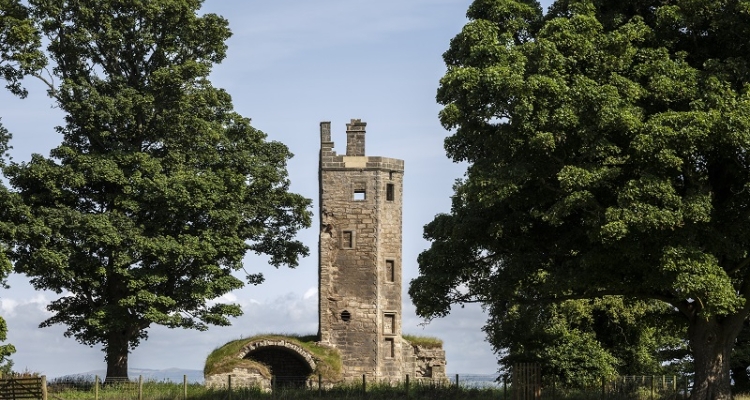
Guest blog: Bringing Staneyhill Tower Back to Life: A Remarkable Restoration Story
Nestled within the Hopetoun Estate, Staneyhill Tower has stood since the 17th century. Thanks to a meticulous restoration project led by Grey McPherson Architects, and carried out by Brown Stonemason, and with structural engineering support from Narro Associates, this striking structure has been given a new lease of life. Reviewed by Historic Environment Scotland, the project not only preserved the tower’s historic character but also ensured its survival for generations to come.
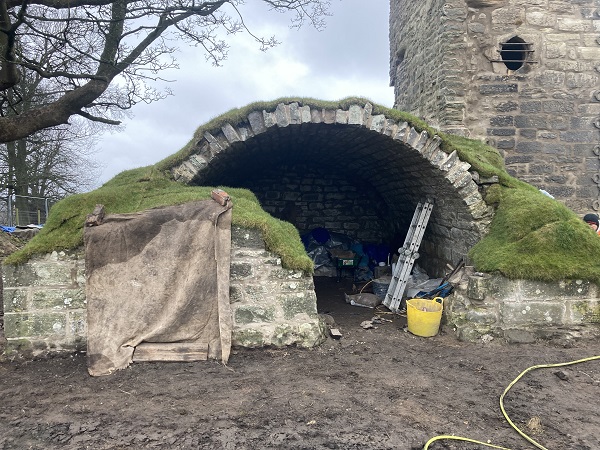 For at least 170 years, Staneyhill Tower had remained in a state of disrepair. Historical photographs dating back to 1850 show the structure — along with two vaulted arches at its base — in considerable ruin. Recognising the need for urgent intervention, Hopetoun Estates embarked on this ambitious project, aiming to stabilise and protect the site while maintaining its place within the surrounding landscape.
The restoration focused on essential structural stabilisation, extensive stonework repairs, and careful repointing. The most delicate work was required for the vaulted arches, which had suffered severe damage due to intrusive root growth. Investigations revealed that two perpendicular arches were at risk of collapse, so a reinforced masonry build-up was introduced to prevent structural failure. To ensure future observers could distinguish between the original and restored sections, red stone chippings were embedded into the new masonry—a requirement set by Historic Environment Scotland.
To protect the vaulted arches from further environmental damage, a bentonite clay layer was applied and then turfed over, providing natural insulation against water ingress. Hidden beneath this layer, stainless steel clamps were discreetly installed at the top of the arches, offering additional structural reinforcement without compromising the tower’s historic appearance.
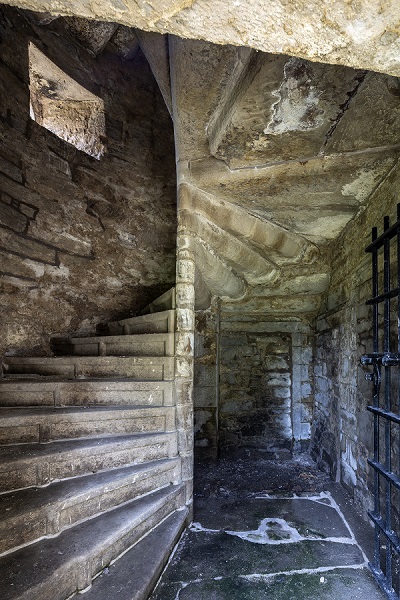 One of the most exciting moments in the project came with the rediscovery of the tower’s interior spiral staircase. For over 150 years, access to this hidden feature had been impossible, and initial drone surveys suggested only half a flight of stairs remained. However, once the team gained entry, they were thrilled to find two full flights still intact—a rare and well-preserved glimpse into the tower’s past. To protect this architectural treasure, a secure gate was installed to manage access while allowing visitors to appreciate the craftsmanship.
At the tower’s summit, original stones unearthed during ground clearance were reinstated, and a newly crafted stone completed the structure. A low-level fence now protects the tower from livestock while ensuring visitors can admire this remarkable site up close.
The restoration of Staneyhill Tower is a great example of historic conservation done right. Beyond stabilising the structure, the project has breathed new life into a neglected landmark, allowing it to continue standing proudly within the Hopetoun Estate. With ongoing maintenance now in place, this striking tower will remain an enduring feature of the landscape, offering a tangible link to the past.

The views expressed in this blog are those of Narro Associates and do not necessarily reflect the views of Scottish Land & Estates. No liability can be accepted by Scottish Land & Estates or any of its staff for any misstatement in it or omission from it.
Comments