

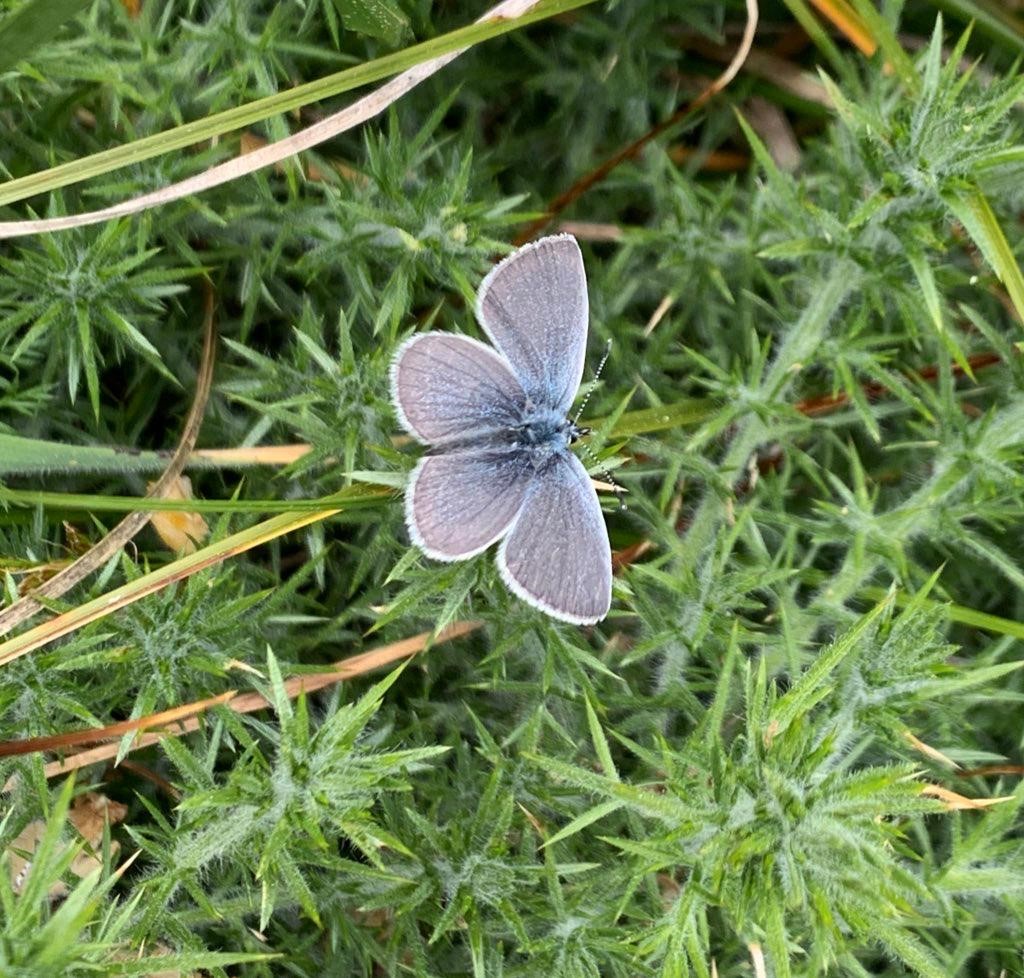
This project was a collaboration between Balnagown Estate and Butterfly Conservation Scotland to improve the habitat for the Small Blue and Dingy Skipper butterflies by controlling scrub encroachment, clearing open space, and then fencing an area of approximately 40 acres to allow winter grazing of cattle to maintain the habitat. This work also improved public access to the site, including a core path.
The site is of national importance for the small blue butterfly, being one of the only inland sites where it is known to breed regularly. The owners of the estate are highly motivated to ensure that they leave the estate in a better state than they inherited it, and as it was clear that without intervention, this site would regenerate completely to woodland, something had to be done. It was also realized that if the project was planned carefully, there could be multiple benefits, not only to the environment but also to the local community and the estate's own livestock enterprise, which had recently been set up to help the estate's arable farming move towards a more regenerative approach.
This work has improved public access by opening up many of the existing paths (which were beginning to become overgrown) to allow easy access for horse riders, prams, mountain bikes, and dog walkers. When the area was fenced off for cattle, pedestrian gates with handles accessible to horse riders were included. The mulching, pulling, and soon grazing of these existing open areas has allowed the butterflies' food plants to multiply and spread, and the wide path created now allows the tiny little blues to move easily between habitats, making the site much more resilient to the likes of fire or other disasters that could have wiped out the scattered colonies. The work done will allow for multiple meta-populations to exist, which can then reinforce or recolonize areas. The integration of cattle into this environment brings back an important ecosystem engineer, as it is not only their browsing and grazing that will improve the habitat, but also their trampling and dust bathing that will act to maintain the open space and also create and maintain niches for other plants and animals found in the quarry, such as orchids or the many species of mining bees. Having a dry, sheltered wintering area also allows the estate to move most of its livestock off the arable land for the winter, helping to reduce pressure on the arable soils and grass leys within this area, reducing the risk of erosion and fertilizer runoff.
Over the past 3 years, BCS and Balnagown Estates have worked with volunteers from BCS and the wider local community. School children from Invergordon High School have been used to help clear trees and litter. During the work, local contractors have mentioned how often local dog walkers have commented on the work and how much better the area is now for them to get out and enjoy. The highlight was the national launch of the Species on the Edge project on 3 June 2023. This project is a collaboration between Buglife, Plantlife, Bat Conservation Trust, NatureScot, RSPB, Amphibian and Reptile Conservation, Bumblebee Conservation Trust, and the Butterfly Conservation Trust and aims to improve the fortunes of a number of rare species found along Scotland's coastline.
Find out more about the finalists for the Helping it Happen Awards 2023