

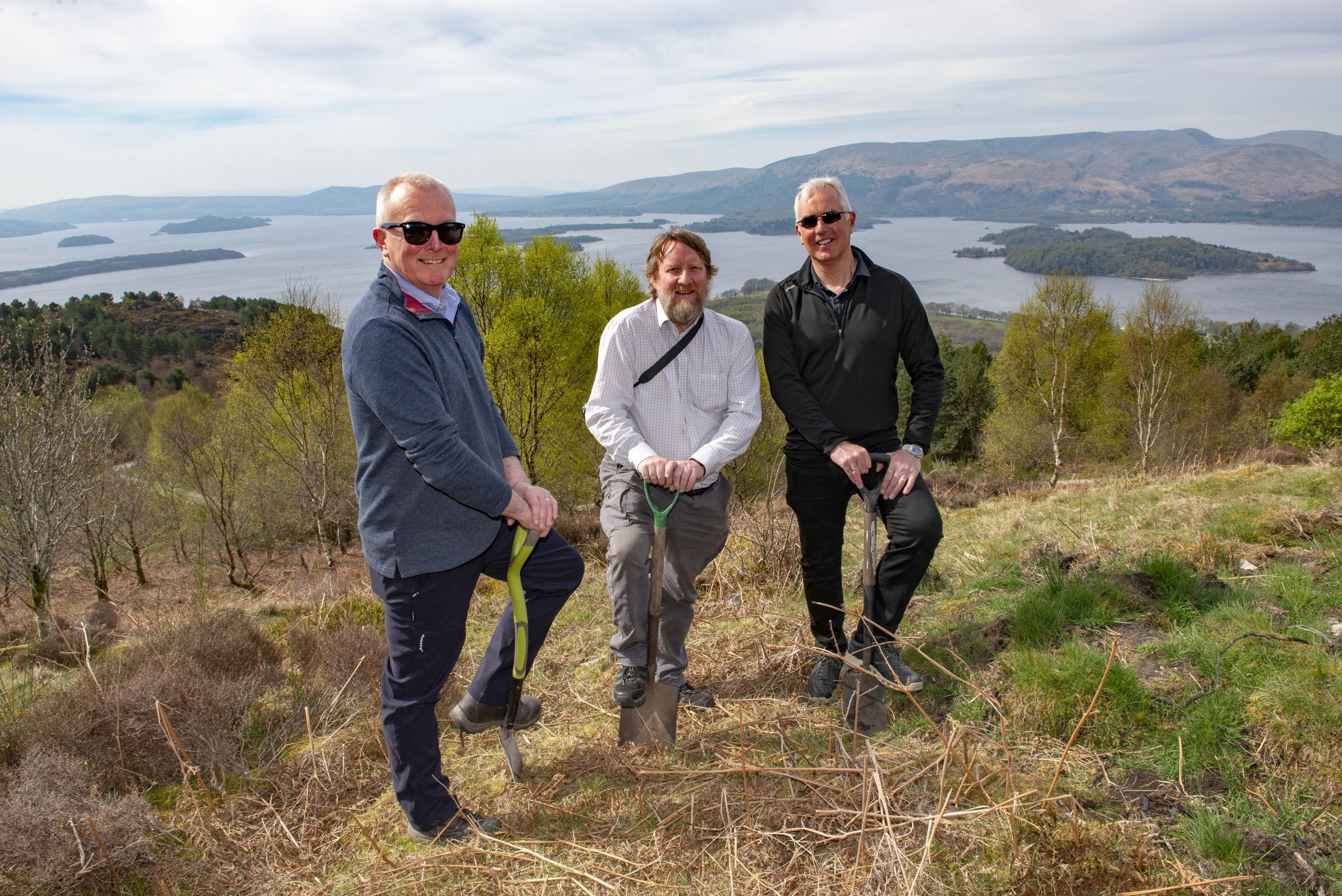
DM Hall have planted 125 trees to mark the firm’s 125th Anniversary at Cashel Forest. The Chartered Surveying firm are focusing in their anniversary year on being more sustainable to ultimately reach net zero, by implementing a programme of steady carbon reduction in their offices throughout Scotland.
Working with its rural partners, DM Hall are taking a lead in tackling climate change and contributing to the efforts being made in Loch Lomond and Trossachs National Park which are turning Cashel Forest into the “Forest for a Thousand Years”, as it’s now being called.
The anniversary planting of 125 trees by DM Hall is a commemorative effort as well as a sustainable one. The tree planting contributes to carbon sequestration, whereby plantings help remove carbon dioxide from the atmosphere, along with the regeneration of native Scottish species.
The planting took place across the 3,000-acre estate which is being turned into a community asset and tourist destination by Baird and Lumsden. Baird and Lumsden is owned by the Royal Scottish Forestry Society and are DM Halls’ specialist rural property arm who manage Cashel Forest. Baird Lumsden provides services and advice to ensure the efficient management of the forest, which includes trees such as birch, oak, juniper and hazel.
The enormous threat of climate change and the large amount of change needed to reverse its damages to the environment are ever present and linger over any efforts in making improvements. As Alan Gordon, DM Hall’s Senior Partner said, “When our firm was founded in Edinburgh 125 years ago, it was impossible to foresee the pressures which climate change would put on society and businesses as we enter the third decade of the 21st century.”
Through the anniversary planting by DM Hall, not only has it contributed to the creation of a beautiful new landscape but as an act of ‘symbolic investment’ for the future. The initiative will help lead DM Hall in becoming as sustainably responsible as possible, with the ultimate aim of reaching net zero.