
Nominee Summary
The Dreel Burn catchment initiative was started by Anstruther Improvements Association in answer to community concerns regarding the state of the burn. The Dreel Burn Investment Readiness Partnership was created to generate investment into the project to meet the needs of nature, people and the economy. The initiative now brings together individuals, community groups, farmers, landowners, businesses, environmental land and river management specialists, nature finance advisors and research and education providers. This is a community-led conservation initiative that is having real positive impacts and acts as a success story for conservation work.
What was the motivation?
The aim is to restore the burn into a clean and biodiverse system, using a catchment-wide management approach. The aims are: for the burn to be a reliable source of clean water and reduce the impacts of climate change; create green space for residents and habitats for wildlife; promote sustainable and regenerative agriculture, coastal fishing, shellfish breeding and tourism; build skills and capacity; and the burn be valued as a biodiverse and vibrant river by all.
The impact of their work
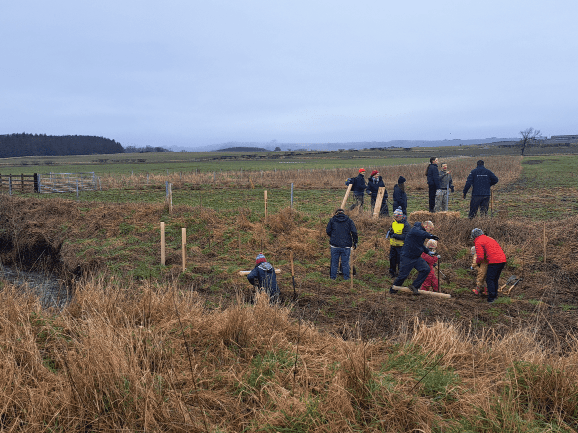
Balcaskie Wetlands project - 3.15 ha wetland creation, tree planting, natural flood management and ford removal (barrier to fish migration), volunteer led willow spilling to protect the bank from erosion. Giant Hogweed (invasive non-native species) management - undertaking a 10 year management plan. 3 initial years of control have reduced plant numbers and seem to have reduced plant size, which will limit seed spread. Community science - monthly water quality measurements undertaken to baseline ammonia, nitrates, phosphates, pH, conductivity and water temperature. There is also monthly invertebrate monitoring, with partnership work with University of St Andrews. Himalayan balsam (invasive non-native species removal) - started a 2-3 year eradication programme in 2024. Volunteer programme and working with landowners to remove plants before they seed.
Including the community
Volunteer training - community trained in water quality monitoring to create a monitoring programme. Also trained in invertebrate monitoring. Have now collected several years' worth of data to baseline the burn. Volunteer opportunities - volunteers involved in nature restoration works e.g. tree planting and willow spilling. Fish in the Classroom - developed and delivered by Forth Rivers Trust for schools in the East Neuk. Students raise brown trout in the classroom to learn about the importance of looking after the river and environment. They go on a trip to the burn to release the fish. Annual community river session - showcase the work and celebrate achievements. Interaction with community e.g. looking at samples, creating wetlands, installing leaky dams. Dreelside Woods - community asset transfer in 2024 to Footprint East Neuk. Now a space for delivering educational activities e.g. bat watching, fungi identification, tree planting, meadow planting, invasive non-native species removal.