

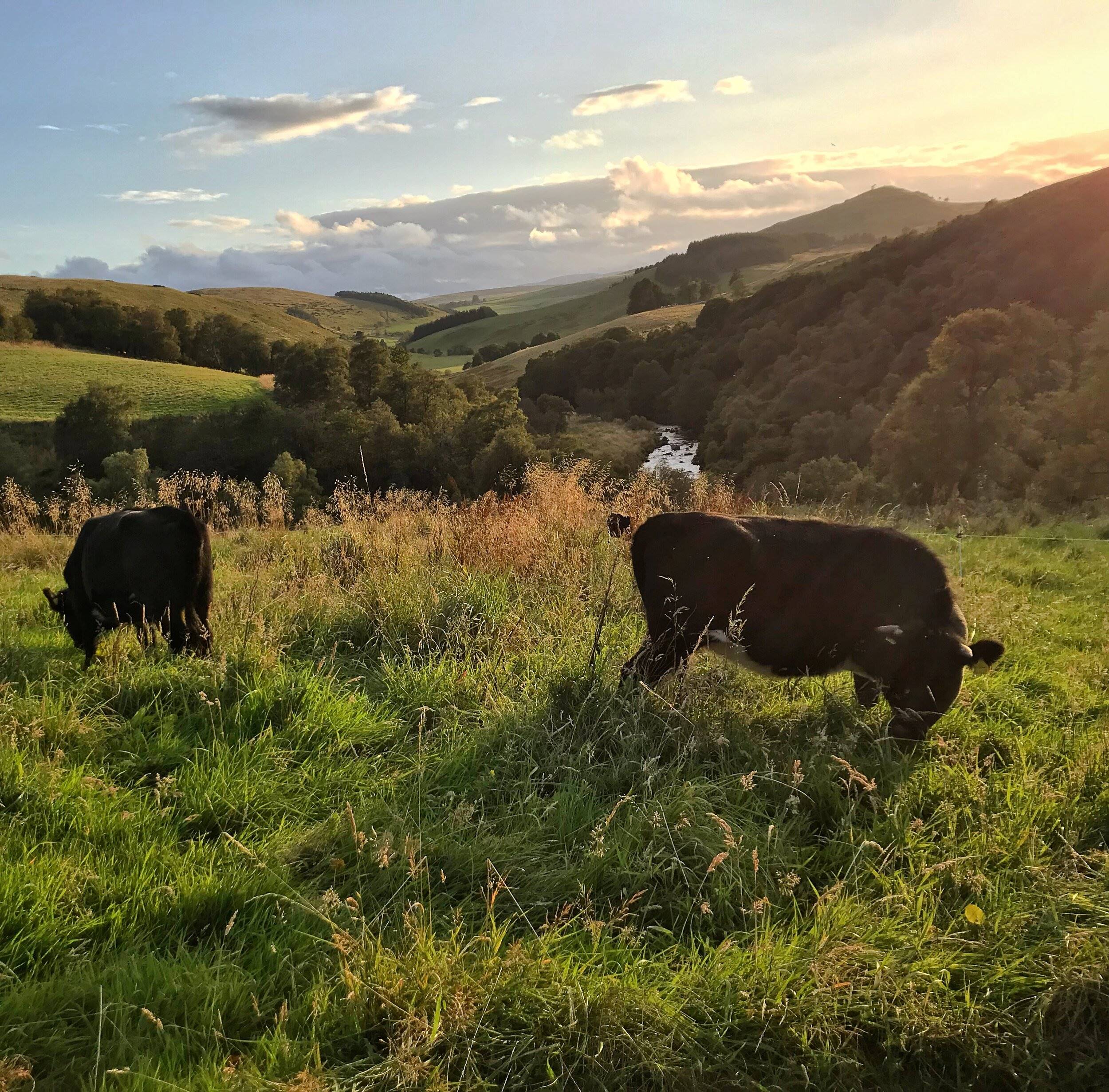
Grampian Graziers are agro-ecological graziers whose herd of beef cattle is continually on the move across a range of pastures.
The organisation is a champion of a very low-input farming method which makes the cost of keeping the livestock significantly lower than on conventional farms.
The cattle are outside year-round and are moved daily, allowing time for the ground to recover and become a haven for wildlife.
The organisation works with local landowners to graze their cattle to deliver mutually beneficial outcomes such as increased plant diversity and soil health and carbon gains.
One colleague, Nikki, is a passionate champion of nature-based farming, and is regularly invited to speak at conferences and events across the UK and works to empower farmers with the resources needed to move towards sustainable, pasture-based systems.
Grampian Graziers has an agroecological approach to their land management, underpinned by awareness of the effects of climate and environmental change.
They also support landowners to reap the benefits of grazing livestock without the headache of managing the livestock themselves.
They will graze their cattle on your land, bringing their ecological knowledge and experience to help develop a grazing plan that meets the management needs of the landowner.
They work with landowners to manage a range of sites such as pasture, woodland and hill ground to deliver mutually beneficial outcomes, aiming to leave sites better than when they found them, with healthier soils, plants, water courses and improved wildlife habitats.
They also provide consultancy and training on grazing and nature-based farming.
The cattle, which are 100% Pasture Fed and certified by Pasture for Life, are herded using mobile electric fencing, and this controlled movement across a landscape enables them to meet the needs of livestock, land and wildlife.
All beef is sold direct to customers, over 85% of whom live locally, with breeding stock now being sold to other farmers and graziers looking for animals that will thrive in low input settings.
Nikki and James were new entrants to farming, moving from an agricultural college in West Sussex to a 7.2ha farm in Aberdeenshire, starting with a small herd of Shetland cattle.
New to farming, they actively sought expertise from people who are already doing mobile grazing and nature friendly farming.
They benefited from networks such as the Soil Association mob grazing field lab and the mob grazing community.
The initial challenge was securing land, before collaborating with a number of landowners.
They predominantly graze for Highlands Rewilding on their Beldorney Estate, near Glass, Huntly, where James is now Estate Manager and Nikki offers consulting on Regenerative Agriculture at Highlands Rewilding.
Working to improve species richness without ploughing and drilling seed has been a challenge when grazing on historically ‘improved’ pastures.
James and Nikki have been using bale grazing with species rich bales for a number of years now, delivering both animal nutrition through the winter months, as well as adding seed and organic matter to the soil.
This has increased the species of plants in a number of locations, bringing in ox eye daisy, red clover, plantain and yellow rattle without soil disturbance.
The pair have had some successes combining mob grazing and agroforestry. Their land includes a 17-year-old woodland of native broadleaf and conifer.
James and Nikki have found they can successfully graze their livestock all the way through the trees which has meant that they have been able to outwinter their cattle.
Also, they’re seeing increased biodiversity. Nikki was recently featured in a photographic exhibition in Glasgow highlighting the role of women in regenerative and agroecological farm systems in the UK and earlier this year spoke to Helen Needham from Scotland the Outdoors for their podcast.