

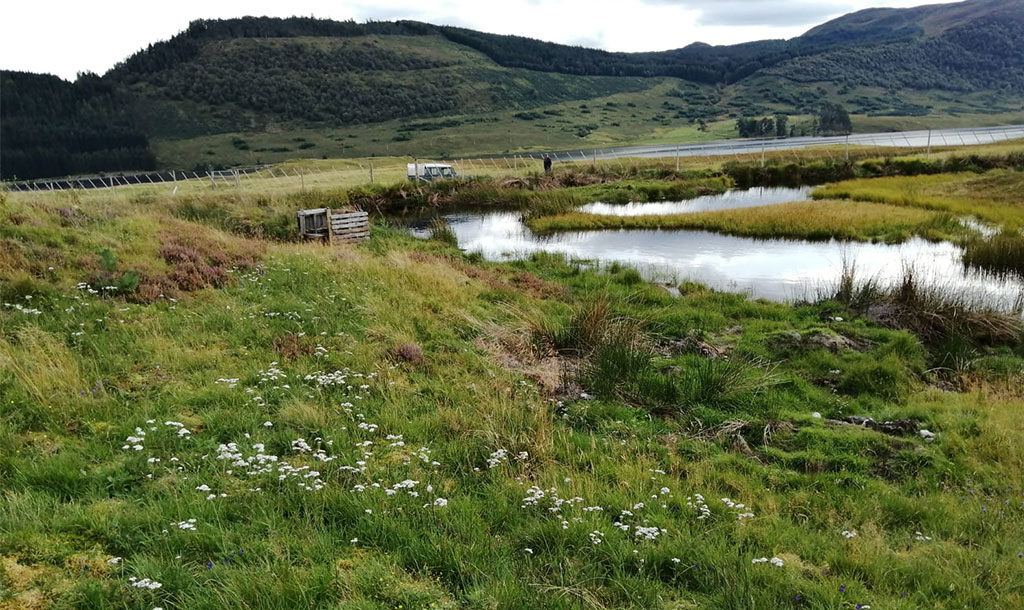
Jahama Highland Estates has been collaborating with its sister organization, Alvance, on an ongoing maintenance and improvement program aimed at addressing various issues in the headwaters of the River Spey. These projects encompass a diverse range of initiatives, such as the planting of 124 hectares of new woodland, over 200 hectares of peatland restoration, a study tracking smolt migration, installation of fish pass lighting at Spey Dam, repairs to fish pass notches to enhance flow conditions, and the installation of a wooded structure. The estate's operational efforts also include daily adjustments to compensation flows to mitigate drought and flooding, modifications to smolt screens throughout the year to accommodate salmon and smolt movement, as well as operating fish pass gates on a daily, and sometimes twice daily, basis.
JHE holds a robust vision for enhancing all environmental aspects of its landholding, including physical features such as the River Spey and its catchment area. The challenges faced by Atlantic salmon and other aquatic species have led to significant threats from various factors. The ongoing habitat improvement projects contribute towards mitigating these challenges. The commitment of JHE's staff to their working environment is profound. This commitment translates into continuous monitoring and adaptation of working practices to positively impact the natural surroundings. The motivation behind these efforts stems from both commercial interests and personal convictions. The organization's collective dedication to improvement resonates deeply.
The habitat enhancements undertaken in the headwaters of the River Spey and the Upper Spey possess far-reaching implications for the entire river's expanse and the fisheries it supports. Numerous jobs are reliant on this industry, and the biological effects of these improvements will extend throughout the river's course. The wooded structure initiative, involving collaborations with various organizations and specialized consultants, has drawn on the expertise of multiple departments within the organization, including hydro, sporting, and farming. Notably, the smolt tracking project features a purpose-designed smolt wolf trap engineered by Alvance, recognized as the "gold standard" in smolt traps. Roger Knight, Director of the Spey Fishery Board, commented, "This project will significantly enhance our understanding of smolt migration and survival in the upper River Spey."
JHE and Alvance maintain ongoing collaboration with a wide array of stakeholders, including SEPA, Spey Fishery Board, Spey Catchment Initiative, NatureScot, environmental experts, local knowledge providers, foresters, agricultural contractors, and their own diverse staff comprising farmers, engineers, hydro team, sporting team, office personnel, fishermen, and naturalists. This collective effort harnesses local, specialized, and historical knowledge to inform their projects and ongoing operations.