

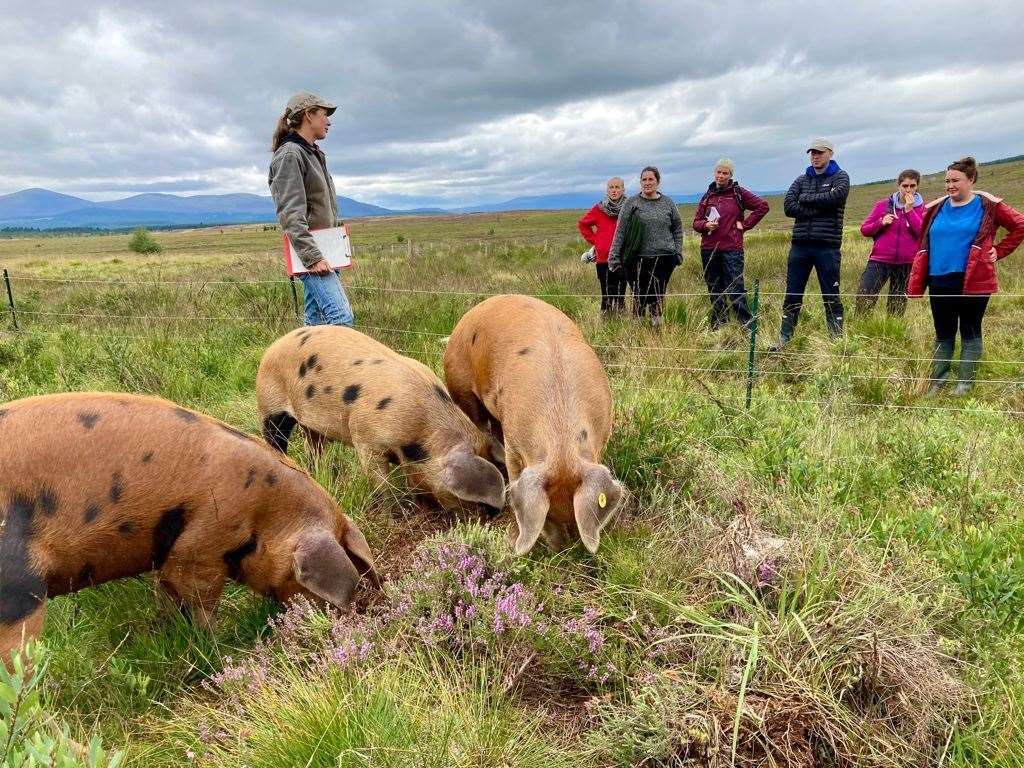
Lynbreck croft is situated in the Cairngorms National Park. Lynn and Sandra acquired Lynbreck croft in 2016 and had no prior experience in agriculture, but they held a strong passion for animals, nature, and outdoor activities. Sandra's upbringing in Switzerland included annual trips to Scotland to visit family, while Lynn hails from Northern Ireland, where most of her relatives still reside.
The duo first crossed paths in 2012 as National Trust apprentice rangers and soon recognized their shared vision of living off the land and achieving self-sufficiency by growing their own food and raising animals. This initial vision evolved into the foundation of their work at Lynbreck Croft today. Upon purchasing the 150-acre croft, they realized the need to expand their operations and transition into a farm, a trajectory that was not originally part of their plans. Despite lacking farming experience and financial resources, and dealing with a semi-derelict croft featuring two derelict buildings and a wooden hut for habitation, they successfully transformed the croft into a thriving enterprise.
Lynbreck Croft also serves as a host for public, group, and customized private tours of the croft, sharing their journey with those interested. Additionally, they offer self-sufficiency courses at the croft, covering topics like 'Living off the Land,' 'Woodcraft,' and 'Foraging,' thereby providing educational opportunities for the broader community and the public.
Lynbreck provides an extensive array of products including pork, beef, eggs, honey, and compost. They firmly believe that consumers should be aware of the origins of their food, as the food's sources have a significant impact on personal health and the environment. Encouraging consumers to inquire about their products' origins, Lynbreck provides information about the animals and their farming practices when selling meat and eggs. This transparent approach also extends to their bees and honey production. Lynbreck's approach to animal care promotes biodiversity, with animals receiving high-quality feed and the freedom to engage in their natural behaviors. The animals are not subjected to routine medical treatments commonly found in other farming systems, which contributes to the premium price of their products. Their business and lifestyle are in alignment with natural processes, forming the foundation of their operations.