

Pitmain and Glenbanchor Estate, a 12,000 acre estate near Kingussie, has an outstanding record of habitat improvement. From aggressive peat restoration measures, to being one of the first estates involved in the pioneering South of Scotland Golden Eagle Project to the most recent Calder River Restoration project.
This estate is creating huge environmental impact. Particularly, the Calder River Restoration was hugely ambitious in that it delivered a landscape scale project tackling a whole sub-catchment, with positive impacts to the Spey downstream. The project was further completed on time and within budget despite lockdown challenges, reflecting the urgency of the work.
Wild salmon populations are suffering serious decline in many Scottish river catchments. One contributing factor in this decline is the absence of native woodland corridors along river banks. The River Calder has been identified as a degraded water course, with little tree coverage in its watershed. The river channel is uniform, and lacks the deeper pools and shelter that growing fish and invertebrates need to thrive.
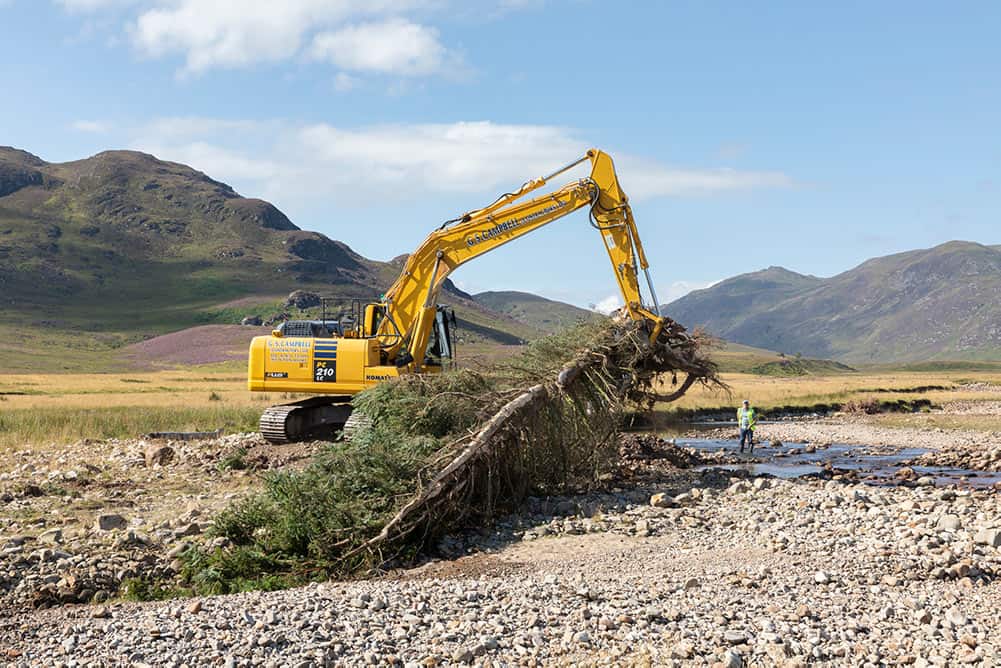
The Calder River Restoration is a collaboration between the Spey Catchment Initiative and Pitmain and Glenbanchor Forestry. This project involves two stages: (1) introducing felled trees into the river, disrupting and slowing the flow. This allows gravel deposits and other natural features to build, creating optimum egg laying beds for wild salmon and improved habitat for other river dwellers; (2) the establishment of riparian woodland along the river’s banks.
Over time, woodland debris will enter the channel and naturally perpetuate the phenomenon explained in stage one. Shading provided by the growing woodland will help to control rising water temperatures due to the climate change, a serious threat to salmon.
The Calder Restoration aims to drastically better river, fish and invertebrate health in the River Calder. Specifically, restoring a natural woodland along the Calder provides requisite shade, and the woodland debris entering the river will promote an ideal environment for young salmon and invertebrates to grow.
On a larger scale, the project will contribute to reducing flood risk further downstream by slowing the flow. Natural flood prevention measures mean less expensive hard engineering is required further downstream and may further prevent future flooding along the Spey. Over time, the project will make a significant contribution to addressing the dual challenges of climate change and the biodiversity crisis at a sub-catchment scale