Nominee Summary
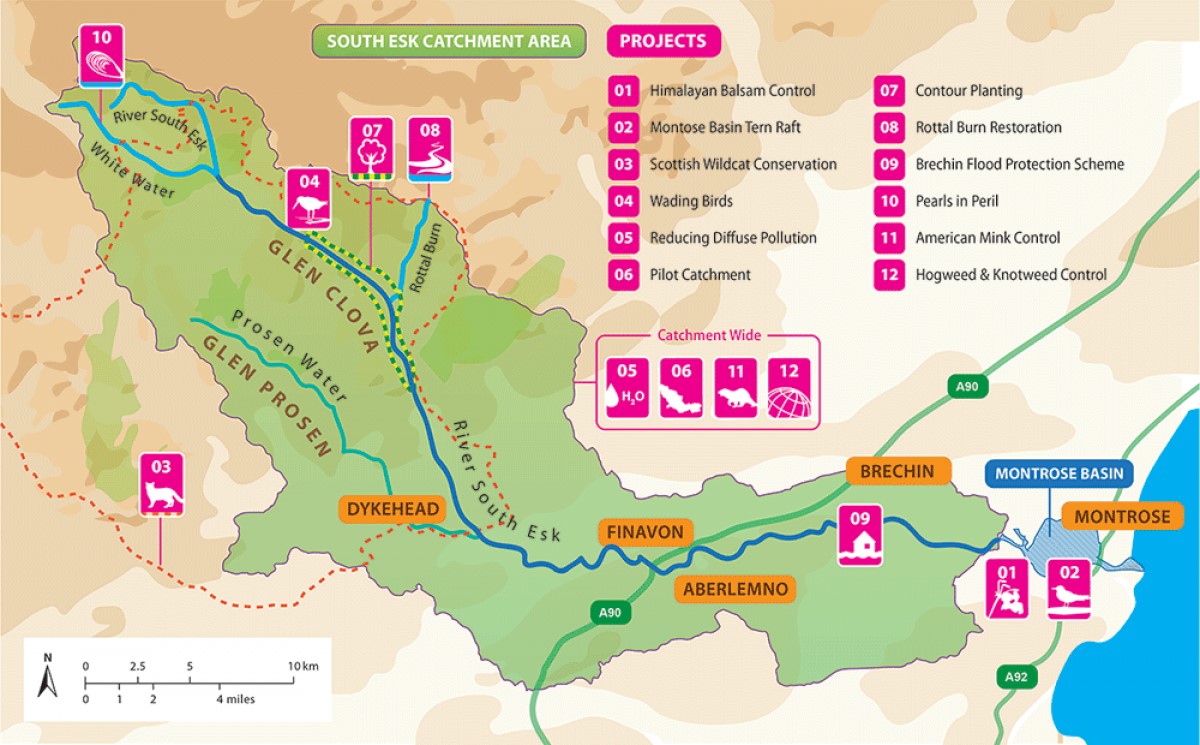
The River South Esk catchment across Angus is home to some of the most varied wildlife in Scotland and are a Special Area of Conservation because of the Atlantic salmon and freshwater pearl mussel present within the river system. The River South Esk catchment partnership (RSECP) was established as a steering group in 2004 with the aim of creating a Catchment Management Plan in order to discuss, propose and agree the main environmental, social and economic issues affecting the catchment and then develop aims to carry out actions which will guide its future management in a sustainable way
What was the motivation?
At first glance this attractive area would appear to be in perfect condition due to the wide range of wildlife it supports. However, years of human activity have changed the natural state of the river. Farming and forestry have altered or led to the loss of habitats, leading to a decline in the species they support. Working to address these issues through nature-based solutions, the partnership offers an approach to conservation that aims to restore and work with natural processes. Ongoing pressures and continual changes in the law which affect activities carried out in the area have reinforced the need to develop a more joined-up approach to the way this water resource is managed. To tackle these matters, representatives of various organisations have been meeting regularly since 2004 with the aim of developing a catchment management plan which has focused on six key topics; Quality of water, Water resources, Managing floods, River engineering, Habitats and species and Socio-economics factors. The City of Brechin has suffered the brunt of South Esk flooding with major events recorded as early as 1853. New flood defences erected following a event in 2002 proved no match for the devasting impact of Storm Babet in 2023 and this has informed the remit of the partnership which believes that the new Flood Directive may see a change of emphasis in managing floods towards area-based solutions. The evidence from the field trials supports the success of these solutions.
The impact of their work
The partnerships first Catchment Management Plan was launched in 2009 and through the members valuable skills and expertise this has enabled the delivery of ambitious nature-based solutions with focussed land use projects since 2019. This important work enables action to help address the climate and biodiversity crises. Review of the CMP in 2017 highlighted the successful delivery of approximately 90% of actions, all contributing to improving the health of the catchment. Through Naturescot funding, the Partnership enabled riverbank restoration and wetland habitat creation at five sites upstream in Glen Clova and native broadleaf expansion in riparian and montane zones in Glen Doll. Ongoing monitoring will allow the Partnership to build up an evidence base showing the multiple benefits these small interventions can make. The ‘Restoring the Rottal Burn’ project was awarded the UK River Prize by the River Restoration Centre in April 2023. The project is an example of what can be achieved when local partners, experts, academics and landowners combine their strengths for the benefit of the local environment, biodiversity and community. It continues to inspire new restoration projects across the River South Esk catchment and Angus. River restoration specialists and a varied stakeholder network visit the site and witness river restoration as it evolves. Not only has the project restored nature and contributes to local and global outcomes, it aids climate change adaptation and resilience, increased carbon storage, and provides natural flood management benefits for downstream communities and landowners.
Including the community
This water resource is of immense value to a variety of users across the local community, including businesses, and tourism providers. It is a source of drinking water, irrigation for crops, watering for livestock, a valuable habitat for wildlife, and acts as a basis for tourism, recreation and salmon fishing. Engagement with the community over the Development Phase plans was an important part of the NRF funded river restoration project, as was working with sitting agricultural, sporting tenants, and residential tenants. Any proposed land use change or change to the management of land requires the agreement of all parties and to carry out effective tenant negotiation within the timeframe provided for project development has been a significant challenge with many lessons learned. Working in partnership across RSECP partners, agencies and landowners has been a positive experience for the RSECP. The partners have welcomed the opportunity to deliver the project as a consortium, with each benefitting from the experience and insights of the others to form a holistic and practicable project. Developing deeper relationships with Angus rural businesses has been extremely valuable and insightful and will hopefully lead to further collaboration. All parties, many delivering a project of this scale for the first time, have acquired experience and skills that will be of benefit when delivering the next phase and has allowed the opportunity to identify areas of improvement and how to better anticipate and manage risk.