
Nominee Summary
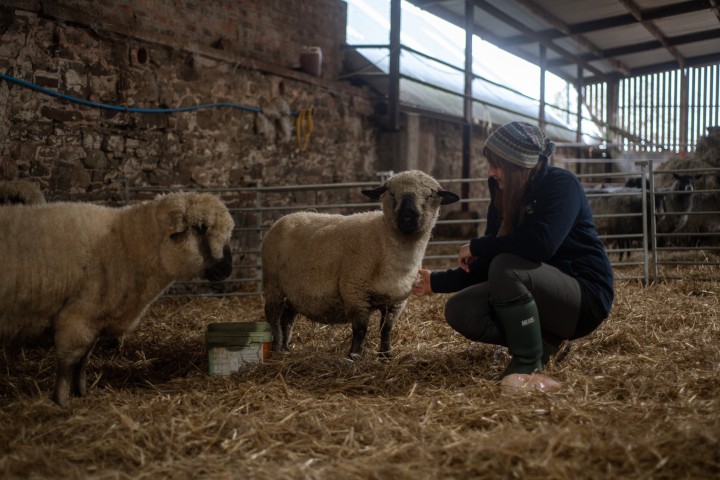
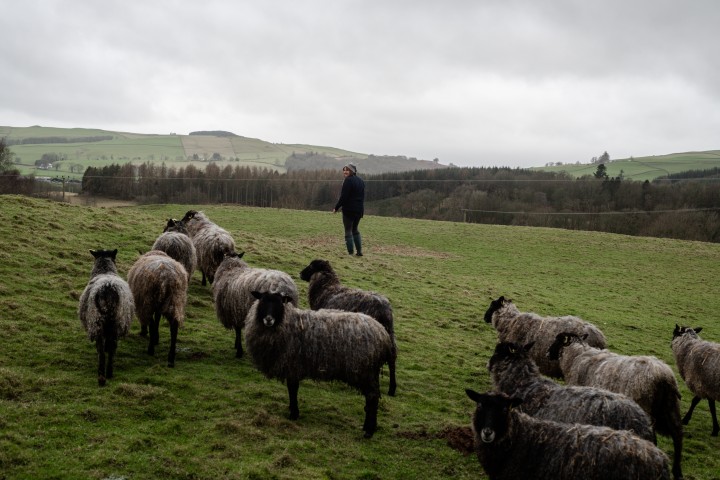
Low Auldgirth Steading is an organic livestock farm (30 acres owned + 50 rented) run by Ruth Ashton-Shaw. Organic farmer producing wool, meat, and eggs through regenerative practices that prioritise soil health, biodiversity, and high animal welfare. Ruth focuses on rare and native breeds, supporting resilient, localised food systems that are both environmentally and economically sustainable. She was awarded Sustainable Small Farm of the Year in the Rare Breeds Survival Trust Awards 2025 at the recent RHS (details attached FYI). Ruth and her husband had previously lived in Manchester, where they operated a design consultancy with international clients.
The approach of your nominee
Ruth's approach to farming has been shaped by a desire to do things differently - from the ground up. As a new entrant with no agricultural background, she quickly realised that competing with larger, more intensive systems was not viable. Instead, she embraced small-scale, nature-friendly farming, choosing organic certification and regenerative principles that prioritise soil health, biodiversity, and animal welfare. This shift included rearing rare and native breeds better suited to low-input, pasture-based systems, and choosing diverse, rotational grazing to build resilience and reduce environmental pressure. Ruth also focuses on short supply chains and direct customer relationships through local sales, a community food hub, and on-farm events. One of the most innovative developments is her move into agroforestry - integrating trees into grazing and cropping systems. This approach builds long-term climate and ecological resilience while maintaining productivity. What sets Ruth apart is her focus on farming as a holistic system - where food, nature, and wellbeing are interconnected. Her farm is open and welcoming, with seasonal supper clubs and hands-on volunteer opportunities designed to connect people with where their food comes from. It’s a model rooted in the belief that farming can restore landscapes, support rural communities, and offer a better future for people and the planet.
Overcoming Challenges
Starting from scratch in farming comes with a steep learning curve - and for Ruth Ashton-Shaw, that curve has been steep and at times isolating. With no generational knowledge, no existing infrastructure, and limited financial resources, she had to build her farm - and her identity as a farmer - from the ground up. Access to land, funding, and markets were initial barriers, but the biggest challenge was carving out a viable path as a small-scale enterprise in a food system geared toward scale and efficiency. Instead of scaling up, Ruth chose to deepen her approach - focusing on quality, ecology, and community. This meant finding her own route to profitability, building direct relationships with customers, and exploring unconventional ideas like combining food events with farming. Ruth has also had to navigate the emotional and mental toll of running a farm as a sole female operator, balancing family and business, often in the face of scepticism. She made a conscious decision to put wellbeing - hers and others’ - at the heart of the farm, creating an inclusive, supportive space where people can feel a sense of belonging and purpose. Her persistence in the face of these barriers has paid off: she’s built a respected business rooted in sustainable values, with a growing reputation for innovation and quality. Her story is one of adaptability, grit, and imagination - a demonstration of how farming can thrive beyond traditional models, even under pressure.
The impact of innovation
Ruth’s innovative approach has created measurable environmental, social, and economic benefits. Environmentally, her commitment to organic and regenerative practices has improved soil health, enhanced biodiversity, and reduced external inputs. Her rotational grazing system supports pasture regeneration and increases carbon sequestration, while her rare and native livestock contribute to genetic diversity and animal welfare. The recent development of agroforestry will increase resilience to climate extremes, provide additional habitat for wildlife, and deliver long-term carbon storage - all while producing food. By aligning her farming practices with natural systems, Ruth is actively restoring ecosystems while maintaining a productive farm. Socially, the impact has been profound. Ruth has built strong local connections through the Galloway Food Hub, collaborative relationships with other regenerative growers, and a programme of on-farm events that educate, inspire, and nourish. Her supper clubs have become celebrated community gatherings, breaking down barriers between producers and consumers and showing how local food can be joyful, ethical, and accessible. Economically, Ruth has demonstrated that small farms can be viable by diversifying income streams, adding value, and cultivating loyal customers who care about food provenance and sustainability. She’s proving that profitability doesn’t have to come at the cost of people or planet - and that small, smart, regenerative farms can play a vital role in shaping the future of Scottish agriculture.