

Nominee Summary
Selkirk High School Horticulture staff, Maddy Pope and Anna Johnson, are passionate about teaching young people Rural Skills and developing a love for nature and the outdoors. Learning has been adapted to suit the needs of the rural industries in the area and of the interest of the young people. Staff are commited to ensuring young people have a clear pathway into rural work and develop the skills needed to progress into work or further education.
The preservation of skills
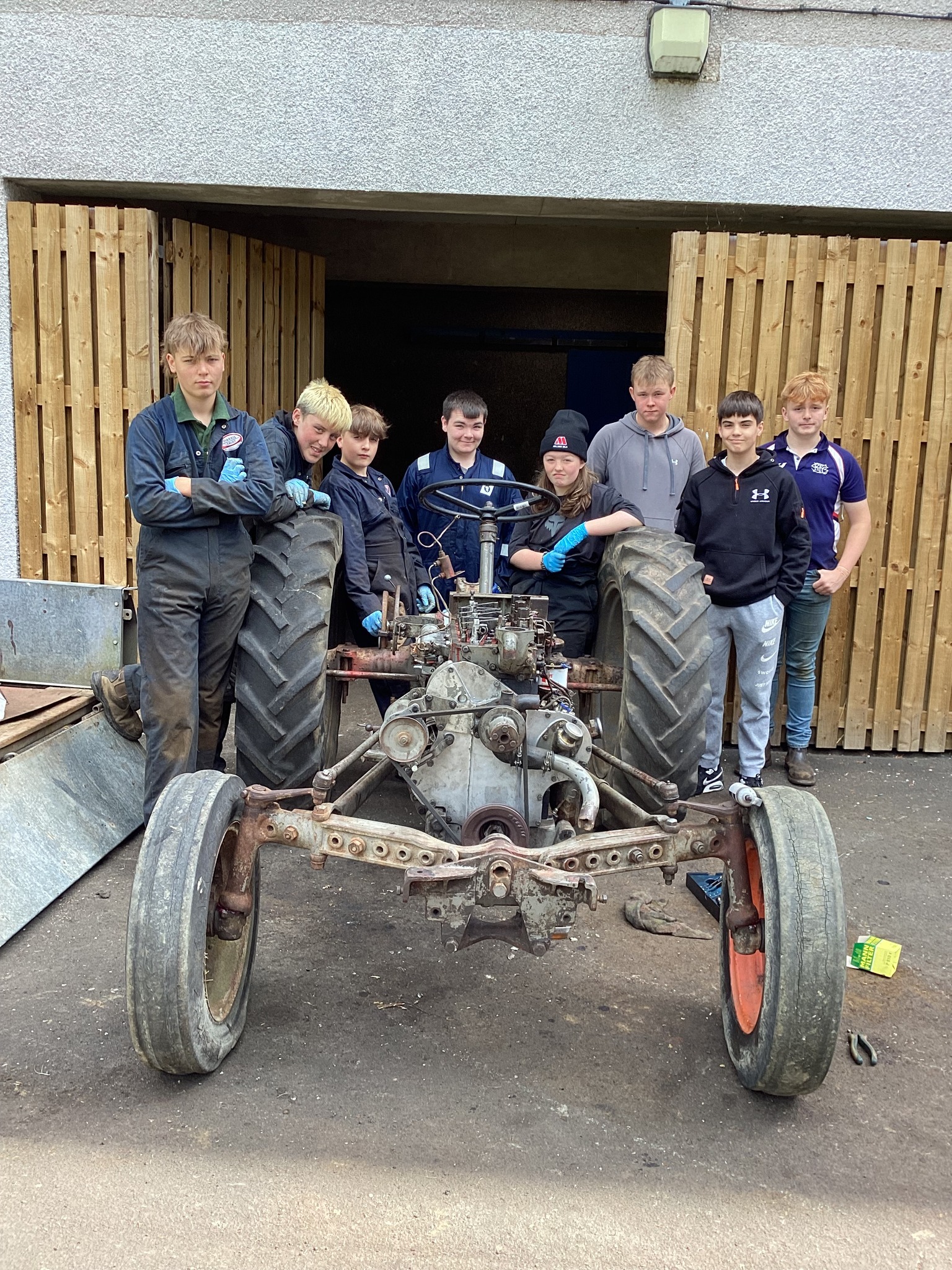
Staff are continuously adapting courses to ensure skills are relevant to rural industries, this is done through working partnerships with local industries and organisations. All students aged 12 to 18, with a yearly cohort of 400 students, study a variety of Rural skills and Outdoor Learning to gain SQA qualifications along with practical skills that are transferrable to the workplace. Hands on practical skills are taught alongside digital skills and theory including research development. All S2 students take part in the Scottish Junior Forester Award to learn about sustainable forestry, woodland habitats and take part in a mass tree planting project. To date we have planted over 2000 native trees and hedgrows. They also study NPA 3 & 4 Climate Change and Sustainability. S3 students can choose to study NPA 4 Horticulture or Outdoor learning which includes FOLA and Rural Skills for Work level 4. Senior Phase students can choose to study NPA 5 Rural Skills - Forestry. Our new course, NC Land-based Engineering, involves restoring a 1960's Massey ferguson 35 tractor to develop practical rural engineering skills on land based machinery.
Increasing awareness
Horticuture staff insititally use social media such as facebook to promote the education we offer along with local events and school information events. We have entered, and won, several Rural competitions and awards for the projects we develop gaining national recognition. Recently we have won the Scottish Finest Woods Award 2024 Crown Trophy, and we have been named runner up for 2025. We won Lantra Albas School Award for excellence in Rural training 2025 and we have recently featured on an episode of BBC Landward showcasing our Tractor restoration project. We are a Gold RSPB school of nature alongside a level 5 RHS School Garden and we have just become a Climate 180 school with Learning Through Landscapes. We work in partnership with several local conservation charities to devlop and maintain conservation areas within the Selkirk area, providing habitats for wildlife and access for the public to engage with nature. We are in development of a school program with Red Squirrel Scotland to educate about conservation of Red squirrels. We are currently advising and supporting schools across the Scottish Borders to develop outdoor learning and Rural skills courses to ensure more young people hve access to rural education.
Ethical/environmental standards
All trees and hedgerows are native species. Students also take part in nature walks to collect tree seeds from the local area which we then germinate. We have created our own tree nursery in addition to the general horticulture unit, where we grow soft fruits, vegetables and bedding plants. We have an intergenerational program where we work alongside various local community groups of all ages, this leads to a greater community spirit and sense of belonging for all ages. Recently we were notified by members of the public that a Horse Chesnut tree in the centre of Selkirk was at risk of being felled, students collected the seeds and the saplings are to be distributed amongst the community. The horticulture department recieves no educational budget from the local council, all funding to run our courses and projects is from sales of plants and produce, successful grant applications, winning competitions or awards or from donations and sponsorship fom local businesses. Local farmers donate well rotted manure, sawmill donates ton bags of sawdust for mulching, Game & Country donate chicken feed for our shcool hens. We often put a request for items on our facebook page and local trades or local community offer donations.
Noteworthy improvements
Various areas of the school grounds were waste grounds, either unused or unsightly. Students performed a survey of the area through tree and plnts species identification and bug hunts. This highlighted a lack of indicator species and limited wildlife habitats. We have since developed an outdoor classroom which includes seating made from recycled plastic, a bench welded out of old bicycle frames, a willow arbour, wildflower swathes, native hedgrows and 15 fruit trees. Alongside this we designed and created a nature sensory garden containing a large variety or perennial herbs, suitable for visually impaired students, mud kitchen and a mag stand. The biodiversity has dramatically increased as the Outdoor classroom has been designed as a Bio-corridor to link surrounding farmland and gardens. Students have also created wildlife gardens including bird feeders, insect and butterfly homes, wildlife pond and hedghog homes. Tree planting projects have establised new community woodlands as well as six community orchards. Courses have been developed to ensure a sustainable and relevant rural education with both staff members, Maddy and Anna, completing level 8 Forest and Outdoor leadership awards, to provide students with a diverse range of rural pathways.
Overcoming Challenges
The main challenges have been getting rural education identified and accepted as being important and neccessary in school settings, as well as trying to fund the courses and projects. Since COVID, outdoor education has recieved more awareness and has been accepted as neccesary, however there is still a still a stigma that it is not an academic subject. This is something we aim to overcome and show that rural education is both neccesary and academic. We have now developed a high reputation for our rural education which has led to several working partnerships and links with local community groups and businesses. External organisations provide free workshops to enhance students education, and speakers come into school to talk about careers in the rural sector, this also includes Police Scotland Wildlife Crime Officer.

