
Nominee Summary
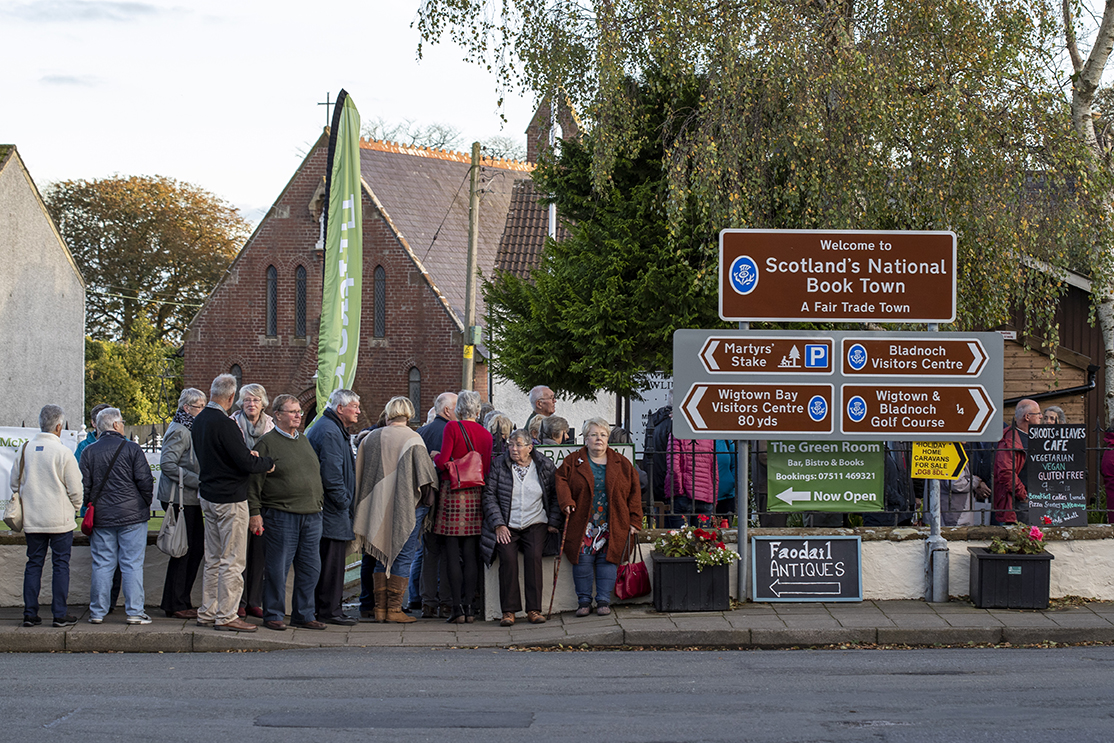
Wigtown Book Festival is one of Scotland's most celebrated cultural events and a powerful driver of rural regeneration. What began as a small weekend offering has grown into a 10-day multi-artform festival, generating an estimated £4.3 million for the local economy. It attracts around 8,000+ visitors annually, extending the tourism season and providing a significant boost to local businesses. Through its diverse programme, the festival inspires, educates and entertains audiences of all ages. It has strengthened Wigtown’s position as a leading rural tourism destination, playing a vital role in the cultural, social and economic success of Scotland's National Book Town.
What makes your nominee stand out?
Wigtown Book Festival stands out because it has helped transform a small rural town into an internationally recognised cultural destination, proving that tourism can be a powerful catalyst for rural regeneration and economic growth. Wigtown had 83 empty buildings before the first book festival in 1999, it now has 4. Community involvement is at the heart of the festival's success. The festival couldn't happen without its army of 120 volunteers, the majority of whom are local residents. In a town of just 1,000 people, this means around 10% of the population actively contributes to the festival's success, demonstrating an extraordinary level of community commitment, pride and ownership. This enhances the visitor experience, with the most common comment in feedback forms noting how welcoming and friendly the book festival is. Many of the local businesses are also involved be it as sponsors, suppliers or venues - there are numerous opportunities for partnership and collaboration. Visitors are encouraged to visit and explore other local tourist attractions, such as the distilleries, the Swallow Theatre, the Galloway countryside, Sorbie Tower and the Whithorn Trust. Being a charitable organisation, local support is fundamental to its success. Operating in a remote rural location presents significant challenges, including seasonal tourism, limited transport links and financial uncertainty. Despite these obstacles, the Festival has continued to grow by building strong partnerships, securing long-term investment and diversifying its activities beyond the festival itself.
Changes that have been implemented
The fundamental change has been purchasing and developing 26 South Main Street. Coincidentally, it's the building where the Book Town project originally began. Instead of renting office space, the festival now owns its headquarters which allows flexibility and new possibilities for generating additional income through retail, events and further community activity. This is becoming increasingly important in a competitive funding environment. Essentially, it provides security and sustainability during these financially challenging times. There has also been an organisational change after Adrian Turpin, Creative and Strategic Director, stepped down after two decades, with Isla Rosser-Owen being appointed as the new CEO, bringing with her experience of other rural, and urban book festivals, and fresh ideas. This marks the start of a new chapter for Wigtown Book Festival, building on Adrian Turpin's legacy while positioning the organisation for long-term growth and community impact. Anne Barclay, Operational Director, has moved into the new role of Communities Director. This new focus will build on community engagement of the Book Town, expanding year-round activity and continued growth. This diversification spreads income, maintains relevance outside the festival season and strengthens funding applications, as the impact is compounded year-round, rather than over just 10 days. Together, these initiatives demonstrate a clear commitment to innovation, partnership and sustainability. By investing in people, place and long-term resilience, Wigtown Book Festival has strengthened the future of Scotland's National Book Town as a tourist destination, while creating lasting benefits for the local economy, community and cultural landscape.
Overcoming challenges
Wigtown Book Festival has demonstrated remarkable resilience in recent years, strengthening its role at the heart of the local community. During the COVID‑19 pandemic, the festival moved entirely online in 2020, ensuring audiences could stay connected through a period of isolation. In 2021, social‑distancing restrictions sharply reduced venue capacities and ticket income, but the festival has rebuilt steadily, with audience numbers rising year on year. Funding remains an ongoing challenge, intensified in 2024 by the loss of a major sponsor, Baillie Gifford. In response, the festival broadened its fundraising activity and partnerships, and secured new sponsorship essential to maintaining accessibility. This support enables free entry for under‑26s and carers, alongside a range of free and pay‑what‑you‑can events. Attracting high‑profile authors to rural southwest Scotland is also a challenge, but the festival’s reputation and a dedicated group of volunteer drivers transporting guests from airports and train stations help secure major names. Recent years have welcomed Justin Currie, Maggie O’Farrell, Alan Cumming, Louise Minchin, Hamza Yassin and Kate Humble. Scottish, autumnal weather has become an increasing concern. In 2025, Storm Amy caused major travel disruption and forced the temporary closure of two key venues, including the flagship venue, the Festival Marquee. Events were relocated to a local church to keep the programme running with minimal interruption. Learning from this, the McNeillie Tent has now been replaced with a community‑owned building as an alternative venue, strengthening the festival’s resilience for the future.