

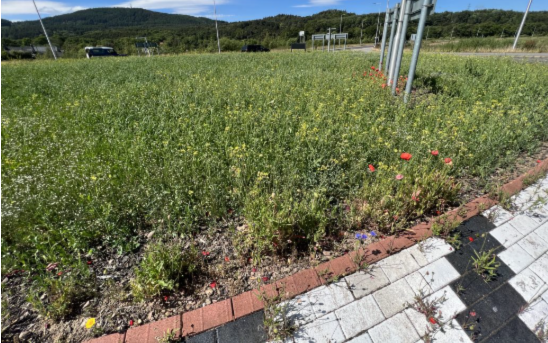
A Highland Council project has successfully established five wildflower roundabouts in Inverness to help pollinators. The move will promote the habitat of bees, butterflies, and birds in the area and acts as a small move for a bigger shift in tackling climate change. The projects focus is to provide safe havens to pollinators while promoting the reduction in carbon emissions.
Where bees, butterflies, birds, and other pollinators can thrive is crucial to protecting our environment, as in recent years their numbers have been declining. The wildflower roundabout project is protecting our pollinators by creating an oasis for them to thrive in, which in turn will have many environmental benefits for Scotland. Pollinators are important to the life cycle as they allow the development of fruit to occur; plant reproduction, while maintaining native flora and boosting biodiversity.
The Highland Council have got two urban roundabouts located on the West Link Road (A8082) flowering now, while three locations on the Inverness Trunk Link Road or Sir Walter Scott Drive are due to flower soon. All plants absorb carbon dioxide, so the more plants we grow, the more carbon dioxide is absorbed.
Almost all synthetic fertilisers that contain nitrogen will have been produced using the Haber Bosch process. This relies on converting the methane from natural gas into hydrogen first and the resulting by-product is CO2 making commercial fertilizer production a large producer of greenhouse gases. Bee-friendly techniques are being used in this project to maintain the roundabouts, including the restriction of the use of weedkiller, chemical sprays, or other pesticides. Reducing the amount of carbon emissions involved.
The roundabouts have been sown with wildflowers which need annual preparation and seeding. This requires local involvement with volunteers and council members working with the hopes of the right weather too. In September, as the season ends, the roundabouts will be trimmed down and the mulch left to fertilise the ground and in the winter months, there are crocuses and daffodils ready to grow to provide early-season-pollinators with an initial food source.
While not only having great ecological benefits to the area, but the wildflower roundabouts are also supporting the communities of inverness. While saving The Highland Council money on grounds maintenance they also act as visually appealing displays promoting the beauty of the outdoors and its wonderful mental well-being benefits.
This Project will hopefully be the first of many in the Highland community and inspire other councils to do the same in their area or to consider the impacts of climate change on their pollinators. It also raises awareness to local people that even smaller projects are still a step towards tackling the climate crisis.