

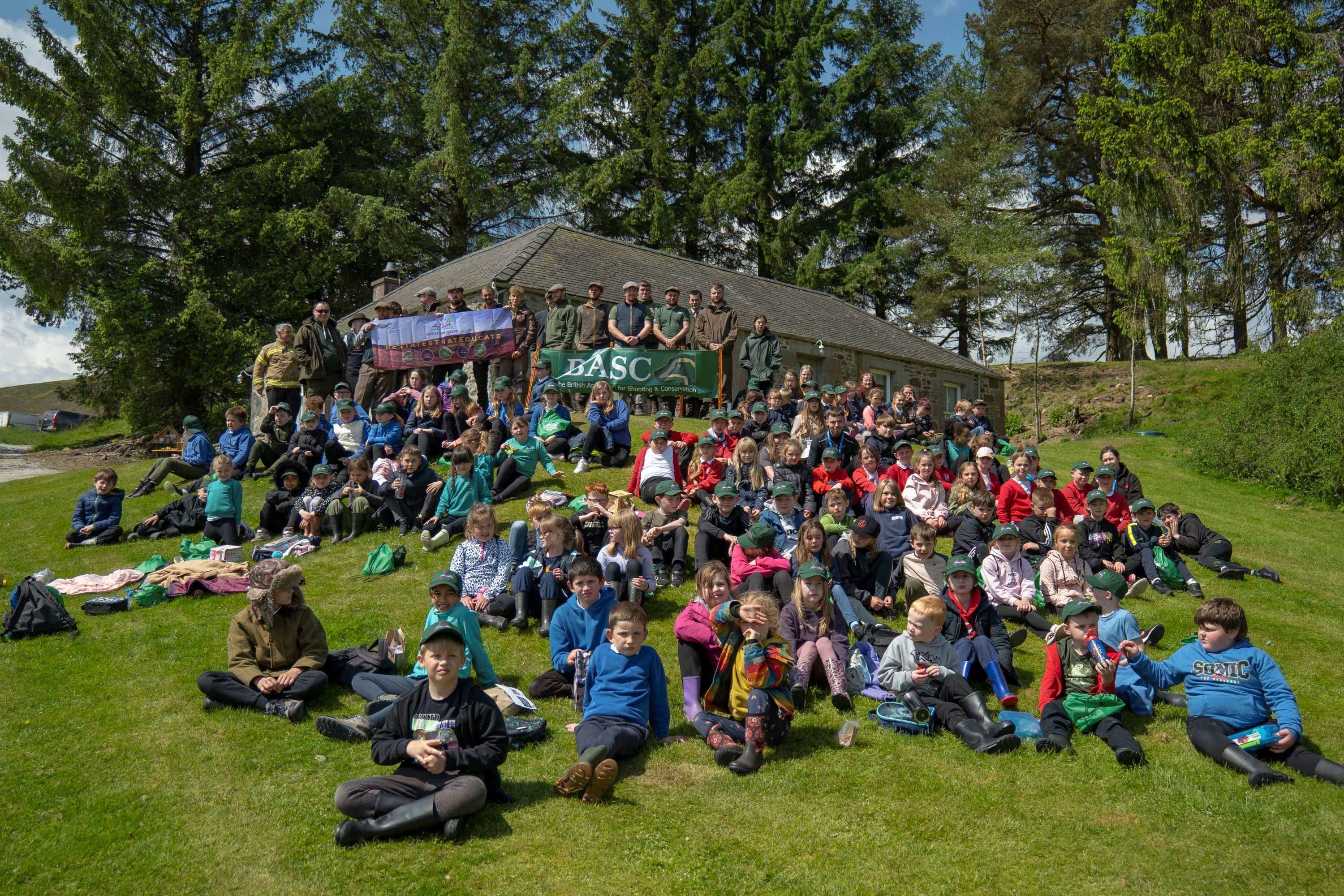
Scotland’s Regional Moorland Groups provide outdoor education to showcase the wealth of wildlife thriving on Scottish estates and to help young people discover the rural career pathways open to them. Since the beginning of the year, SRMG have connected with 2,413 children and adults on topics such as upland sheep farming, habitat and peatland conservation, bird of prey identification, deer management and grouse shooting. Using the #EstatesThatEducate tag, the initiative is the foremost education platform of its kind in Scotland.
SRMG invest a huge amount of energy into hosting events and open days to open access to career pathways in the rural sector and transform perceptions about sustainable land management. Since the events hosted by the Loch Ness Rural Communities group took place, Kilchuimen Academy in Fort Augustus has announced it will now introduce a Gamekeeping qualification = the first school in Scotland to do so. Glendoe and Glenmoriston Estate have offered to facilitate the practical elements of the course. This is a hugely significant and positive development, which will help pave the way for those seeking rural careers.
In Tayside, 300 school pupils visited Abercairny and Findynate Estates, while there were separate events for the Bertha Park High School and Breadalbane Academy. The Tayside and Central Scotland Moorland Group also organised a ‘Pluck and Prepare’ workshop for adults, introducing them to game cookery. In the Grampian region, 220 school pupils visited Edinglassie Estate for two days of moorland skills demonstrations – including moorland safaris, working dog displays, airgun shooting, cooking, sheep handling, deer management and more. Similar events were held across the country, giving students the opportunity to experience working life on upland estates, develop their knowledge of wildlife conservation and gain awareness for rural opportunities.
All schools were invited to take part in #EstatesThatEducate events, with co-ordinators attempting to make sure all children and teachers were able to participate in the programme. Where possible local bus companies were used to support the events, thus enabling the programme to contribute to the local economies. Teachers who participated in the programme remarked that the speakers were knowledgeable, clear in their addresses, and opened thought-provoking discussions and opportunities to learn. Most importantly, many students left the events well-informed of the rural sector and wishing to pursue careers in the industry.
Owing to the success of the events and strength of the partnerships created, the programme is looking to expand and engage with more pupils who are eager to learn more about the countryside and the way it operates. Efforts to expand the number of activities on offer at #EstatesThatEducate events have been well-received, as well as commitments to expand the accessibility of workshops and events to all schools.
Transport costs continue to be a challenge for participating schools, yet efforts have been made to overcome this, such as by securing sponsorship from the British Association for Shooting and Conservation legacy fund to enable the attendance of schools who would otherwise not be able to do so. Several groups have used their ingenuity to bring the hill to the classroom, facilitating classroom-based events to widen the accessibility of the programme and ensure everyone is able to benefit from the considerable skills and knowledge within SRMG.