

New Report Sets Out Business Rates Reform to Support Scotland’s Growth Ambitions
Press ReleaseA new policy blueprint has set out proposals for a fairer business rates system to encourage rural investment, support jobs and protect funding for local services.
Scottish Land & Estates (SLE), the rural business organisation, said its reform paper offers a practical basis for working with the Scottish Government on changes that would better reflect businesses’ ability to pay and recognise their contribution to local communities.
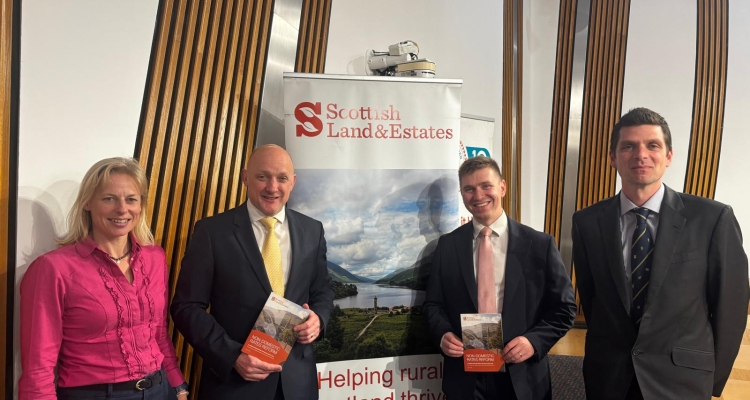
The paper, Non-Domestic Rates Reform: A Fairer Rates System for Rural Scotland, proposes retaining a property-based system while adjusting liabilities to reflect economic circumstances, operating costs and the wider benefits businesses provide.
Its recommendations include:
Measures to promote business growth to protect and enhance income for local authorities from non-domestic rates.
Linking rates more closely to ability to pay, recognising factors such as seasonal income, lower margins and remoteness.
Replacing complex layers of relief with a clear, automatic, standard allowance.
Introducing a growth and investment allowance to support improvements, diversification and job creation.
Recognising businesses’ contributions to employment, housing, environmental improvements, public access and community facilities.
Applying permanent, inflation-linked caps on increases and providing projections of future bills to help businesses plan.
Further proposals include a Community Use Relief for village halls and other non-commercial community buildings, changes to encourage empty properties back into productive use, and a Chief Assessor accountable to the Scottish Parliament to strengthen transparency around valuations.
The paper highlights reported increases of more than 600 per cent in rates liabilities following the latest revaluation. It argues that rural businesses can have substantial property assets while facing tight margins and unpredictable income, leaving bills disconnected from what they can reasonably afford.
SLE acknowledges the Scottish Government’s recent emphasis on supporting business and economic growth and says reform of non-domestic rates would help translate that ambition into greater confidence for businesses to invest.
Patrick Colquhoun, chairman of Scottish Land & Estates, said: “The Scottish Government’s recent emphasis on business growth is welcome. There is a clear opportunity to build on that positive message by working together on practical changes that help rural businesses invest, create jobs and support their communities.
“We share the ambition for a stronger Scottish economy and want to help find solutions. These proposals are intended to provide a constructive starting point for discussions with ministers, local government and the wider business community.
“We all recognise the concerns businesses have raised after the latest non-domestic rates’ revaluation. However, we believe it is time to stop talking about the problems and start discussing the solutions to these challenges. That is why we are bringing forward these proposals. Instead of another review or consultation, businesses simply need action to change the system that is harming their sustainability and growth potential.
“We recognise the financial pressures facing councils and the importance of protecting local services. Our proposals have been developed with that responsibility firmly in mind. Helping more businesses succeed and grow can strengthen the local tax base and provide more sustainable revenue over time.
“We would welcome the opportunity to work through the detail with the Scottish government and local authorities, test the proposals together and agree a practical route towards reform.”
SLE said its modelling indicates that a balanced combination of allowances and multipliers could protect local authority income from the outset while supporting growth in the tax base over time. A working model comparing current and proposed rates, including impacts on local authorities, is available on request.