

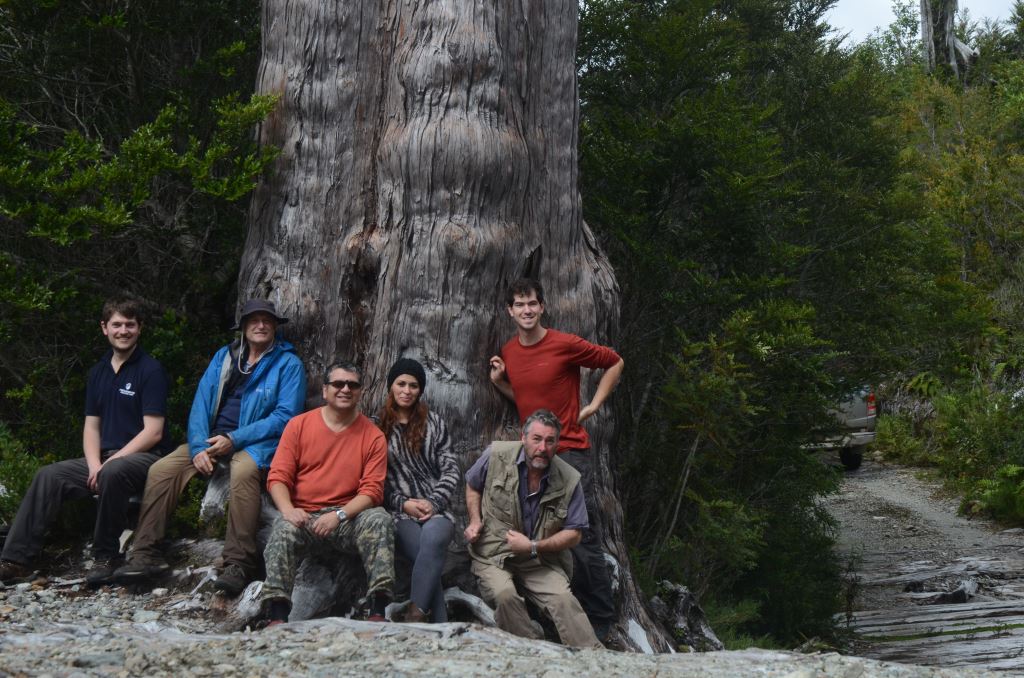
The International Conifer Conservation Project (ICCP) is a world leading conservation programme, dedicated to safeguarding globally threatened conifers. Under the leadership of Martin Gardner the ICCP has worked in over 50 countries to inventory, protect, and restore threatened conifer habitats. Notably, the ICCP has established a network of safe sites across Scotland and beyond, growing thousands of rare and beautiful trees - all of which are species in danger of extinction. In addition to making a critical contribution to the survival of these species, the sites enhance the landscape, inspire and educate the public, and generate data for scientific research.
The ICCP is working around the world to survey conifers in poorly known areas, describe new species, assess their conservation status, and support local partners in protecting and/or restoring their unique habitats. The work of Martin Gardner and his team has highlighted that over a third of conifer species are threatened with extinction in the wild, and that many populations or entire species could be lost unless they are conserved ex-situ. While seed banks are a space efficient conservation method, this is not possible in the case of all species – notably in the case of many conifers. Instead, growing them in safe locations may be a last resort to prevent extinction. Consequently, over the past 30 years the ICCP has collected over 150 threatened conifer taxa. The plants were carefully curated, databased, and grown at the Royal Botanic Garden Edinburgh, and subsequently planted out in safe sites all over the British Isles, and notably in Scotland. To date, the ICCP has secured over 200 locations dedicated to the conservation of threatened conifers. Collectively they hold over 14,000 trees and form the largest ex-situ conservation network of its kind. For a growing number of highly threatened species this may be the last resort for reintroductions into the wild. The trees are regularly monitored and therewith contribute valuable information to science. The ICCP is also pioneering novel ex-situ conservation methods such as conservation ‘hedges’, consisting of plants from different locations to maximise the genetic diversity of material available for reintroductions.