

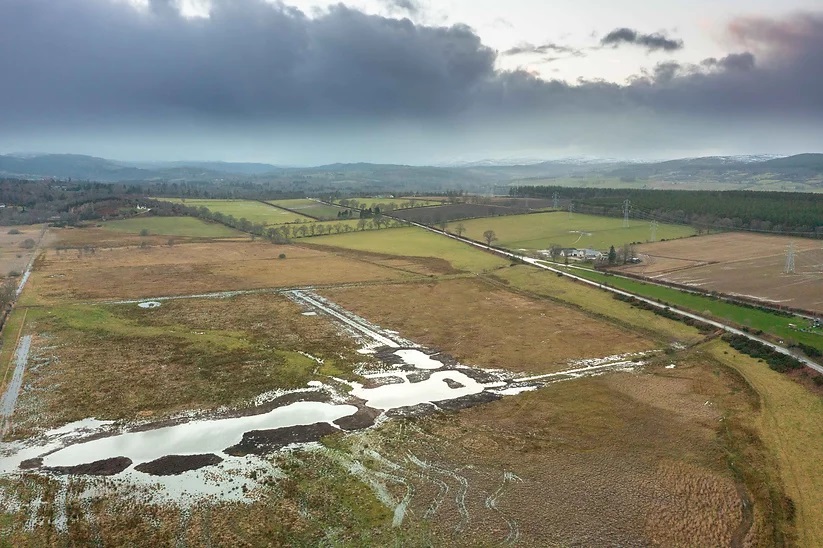
West Loch Ness Farmer Cluster (WLNFC) centres on 8 farms working in collaboration with a forestry commission site to put wildlife and biodiversity at the heart of land management over 15,000 acres covering riparian areas, upland, lowland and traditional hill farmland, mixed forestry and in-shore marine habitats. Participating landowners were already championing a variety of positive environmental policies on their own land, however they recognised that, in order to progress, they needed to work collaboratively to achieve landscape-scale changes.
The land managers had been observing a decline in biodiversity on their farms, with the loss of species such as brown hare, barn owls and wading birds. When conversations between neighbours turned to wildlife it was very clear that the wildlife decline was a landscape-scale problem that needed a landscape-scale solution. On hearing about the farm cluster concept, they realised that a start to solving the problem was to start their own cluster and approached Game & Wildlife Conservation Trust, which provided support with the set-up and facilitation of the cluster. They then secured funding from The Highlands & Islands Environment Foundation, which enabled them to hire an ecologist to undertake a baseline mapping exercise to establish what flora, fauna and habitat types they have in the area.
Results from the baseline studies made it clear that diminishing habitat and lack of ecological connectivity were having a detrimental effect on local biodiversity. From these findings, cluster priorities were agreed to increase the presence of key species through the restoration and re-creation of endangered habitat and increasing connectivity through the creation of wildlife corridors.
Their flagship project is the rewetting of a 50 hectare marsh area. Stage 1 of the rewetting project saw the cluster work hard to clear old fencing, re-profile deep and dangerous ditches to create larger areas of shallow standing bodies of water. Wildlife bridges were created to allow the safe migration of all wildlife across the wetland area. Finally, a new perimeter fence was put in to help control grazing on the exciting flora that is found on the marsh. As a result of the works done the marsh is now better suited for stock grazing and wildlife diversity and they have seen the return of otters and several species of ducks and waders to areas of farmland.
WLNFC are now seeking to engage more land managers in the area and looking at whether the existing cluster could be expanded or whether there are opportunities to create new farm clusters. Huge progress has been achieved with very limited resources and the cluster is eager to see financial support for the development of clusters in Scotland going forwards.