

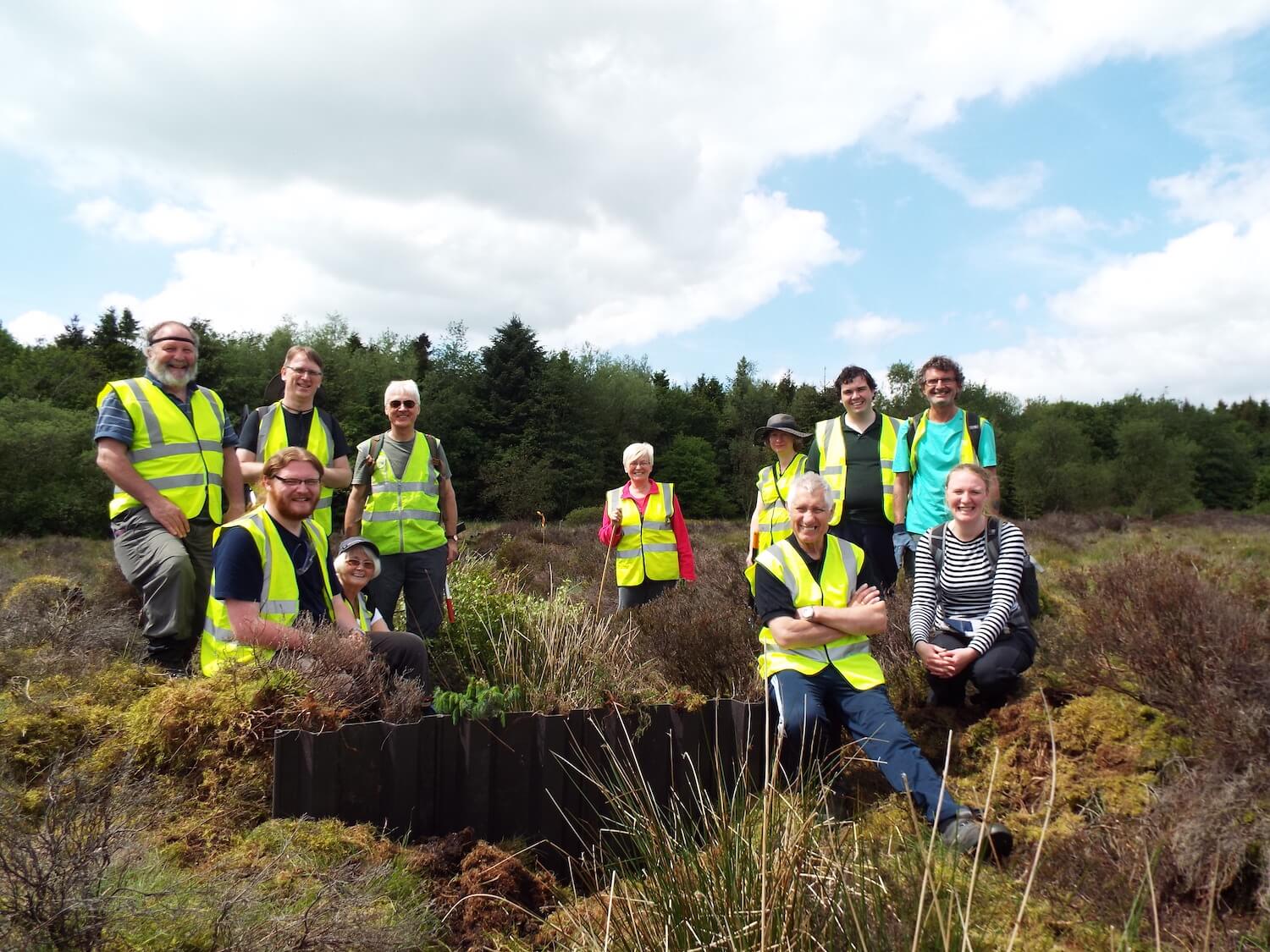
Clyde Peatlands is a Green Network Blueprint delivery project hosted by South Lanarkshire Council with support and funding from NatureScot, through the Peatland ACTION Fund.
GCV Green Network have set up the Clyde Peatlands restoration which will improve over 50,000 acres of Greater Glasgow’s Peatlands and deliver benefits for the climate, nature and people. This move by South Lanarkshire council through GCV Green network comes after the Scottish Government set out in their climate change plan 2018-2032 update to restore at least 250,000 hectares of degraded peatland by 2030.
Peatlands are a key part of the Scottish landscape, as well as our cultural and natural heritage. They are an internationally important habitat and a hugely important carbon store. Healthy peatlands capture and store vast amounts of carbon and should play a critical part of the drive for Net Zero.
Healthy peatlands can capture and store carbon for very long time periods. However, much of Scotland’s peat is degraded and is emitting carbon rather than storing it. Peatland restoration is therefore encouraged to help remove greenhouse gasses from the atmosphere, improve water quality, reduce flood risk and combat climate change.
NatureScot’s Peatland Action Fund has £250 million up to 2030 to support peatland restoration and is funding the creation of two new officer posts in Glasgow City Region. The new Peatland Officers will be jointly managed by South Lanarkshire Council and the Green Network, with support from NatureScot. The officers will speak to public and private sector landowners to identify opportunities, support them through feasibility work and funding applications and project manage on the ground works. One of the officers will have a community engagement role to raise awareness of the value of peatlands, and to provide volunteering opportunities.
Restoring valuable peat bogs will help bolster biodiversity and help fight climate change as Scotland moves towards net zero carbon emissions. Addressing this degradation has a major role to play not only in the drive for Net Zero, but in restoring a unique habitat that is home to an array of plants and animals. The restoration of Clyde Peatlands will also aid the prevention of ecological collapse of certain species that depend on it.