

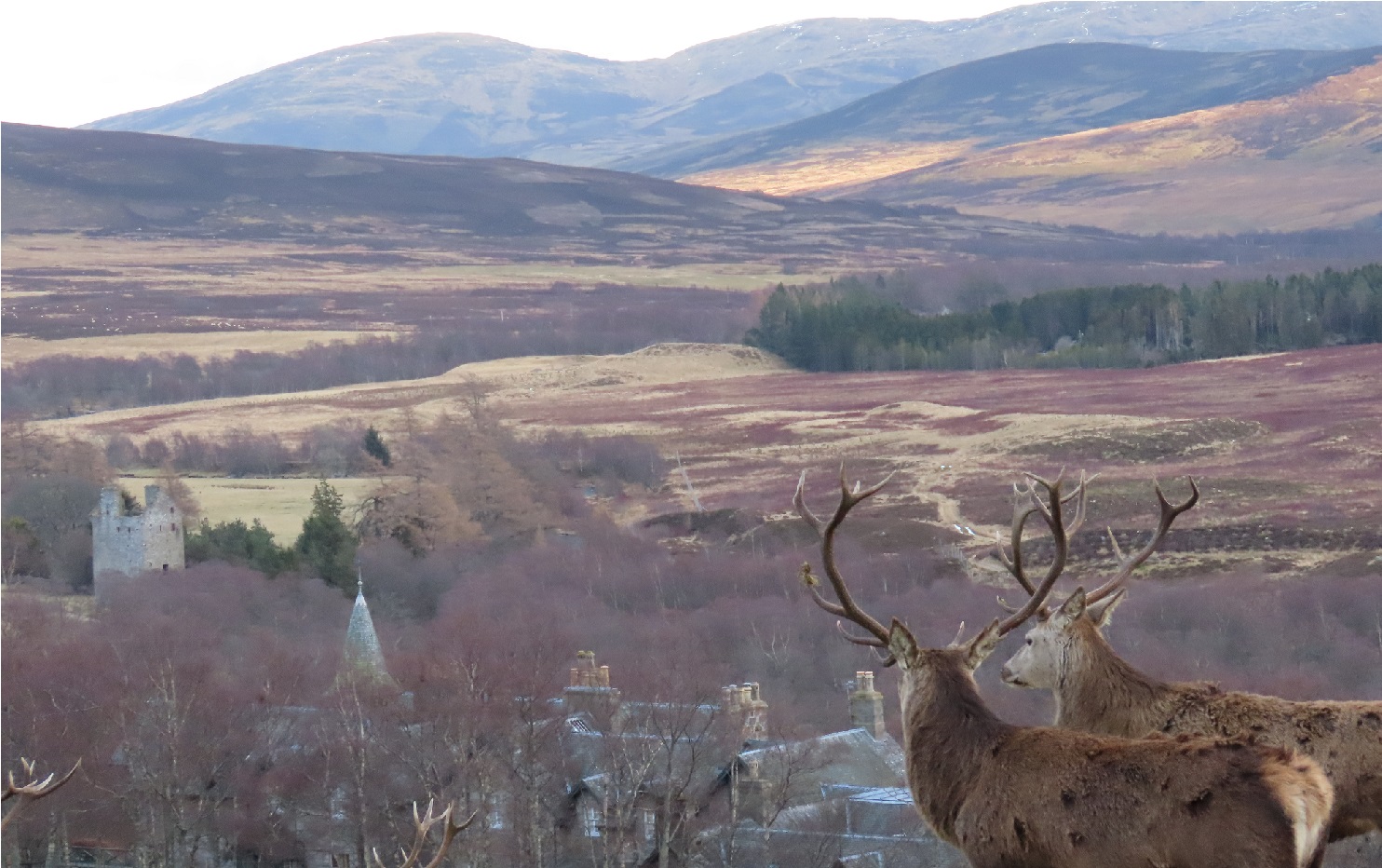
The management of Invermark has an integral focus on conservation and sustainable land management, including restoring habitat and enhancing biodiversity, along with minimising impacts. Understanding species movements alongside land management is proving invaluable to the estate.
Elements of their approach include reducing livestock to reduce grazing impacts, protecting natural regeneration, restoring degraded peatland and widescale surveying of wildlife in order to monitor trends, which has been taking place for 7 concurrent years. The presence of 15 mammal species, 85 bird species, 6 reptile and amphibian species and over 120 invertebrate species have been diligently recorded and monitored alongside countless flora species.
The estate wanted to understand and recognise the overgrazing impacts of livestock, and had the desire to demonstrate that agriculture and sporting activities work in harmony with nature at Invermark.
Through the species monitoring they were able to determine, not only that recently reduced flock numbers are not adversely affecting habitat health but also that moorland management is compatible with the species which use it for foraging and breeding. By having an effective biodiversity baseline, they are able to determine how recent projects such as peatland restoration and woodland regeneration impact on existing wildlife.
Environmentally, a healthier ecosystem provides innumerable benefits from enhanced wildlife populations to increased flood mitigation and increased carbon dioxide sequestration. Having the facts about the wildlife onsite provides a good basis with which to communicate with the local community, tourists, politicians, access takers and wider stakeholders. The evidence allows the Estate to actively demonstrate the biodiversity which lives and thrives on managed moorland.