

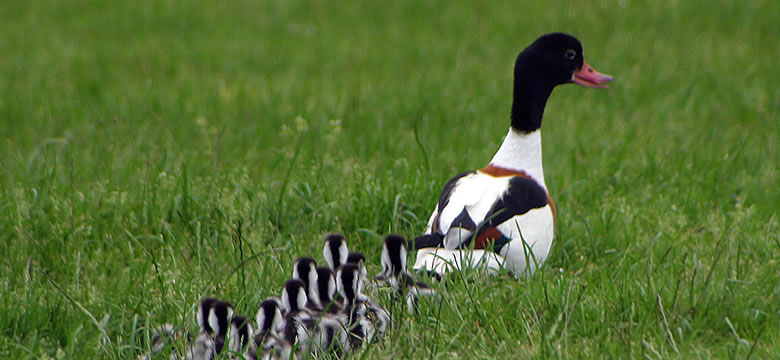
Arbigland Farm in recent years has transformed its production of goods and way of life by incorporating innovative farming techniques. The farm produces milk, potatoes, barley, and beef in a regenerative way that preserves and enriches life in the soil and maintains high levels of wildlife. Their mixed farming operation and whole estate is farmed in hand where they manage an array of livestock, crops and acres of land which support various wildlife and eco-systems. They have proudly enhanced their systems to facilitate an improved environment at Arbigland that benefits all.
The farm has shown commitment to conservation farming having been in the Rural Priorities Environmental Scheme and its precursor the Rural Stewardship Scheme since 2003. Their grassland acts as a store of carbon so that there is less in the atmosphere and less climate change. They have about 100 acres of woodland and the timber feeds their biomass boiler thus ensuring a very low carbon footprint.
Uncropped headlands, beetle banks, unharvested crops, thick hedges, winter stubbles and restricted summer grazing all help to give the birds and insects as much chance as possible on the farm. They have planted over 3,000 trees and 3,500 metres of hedge to add to what was already there. The hedges are trimmed every other year or every 3 years to ensure that there is always blossom and fruit (which grow on the old wood) to provide food as well as sufficient nesting cover.
Currently Arbigland have around 650 cows in milk plus around 400 youngstock, producing 3 million litres of high butterfat milk each year for cheese making, an example of their success in their first year of dairy farming. Their watercourses are all fenced to keep cattle out of them and to allow reeds to grow along the banks, providing a habitat for several rare bird species including reed warblers.
Conservation at Arbigland has resulted in a flourishing and well protected environment in which a number of endangered species thrive at Arbigland such as red squirrels, natterjack toads, otters, skylarks, barn owls, corncrakes and lapwings.
They are currently working with initiatives to contribute to conservation, assisting a local barn owl project with barn owl boxes in 5 potential nesting sites around the estate. And working with Amphibian and Reptile Conservation to colonise a potential natterjack toad breeding site from stock elsewhere on the estate.