

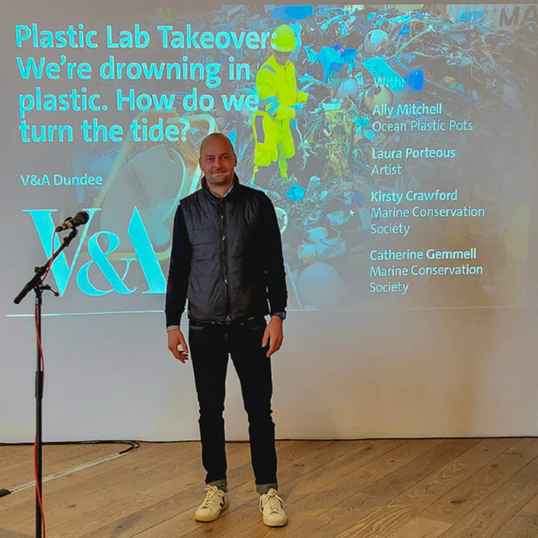
Designed in Glasgow and crafted in Scotland, Ocean Plastic Pots strives to eliminate plastic pollution from the ocean and coastline, diverting it away from landfills. This endeavor transforms a negative environmental issue into a positive and sustainable product. The pots, built for resilience and longevity, also offer the advantage of recyclability, fostering a circular economy and promoting awareness about plastic pollution. An estimated 8 million tonnes of plastic infiltrate our oceans annually. Since its inception in 2020, the company has evolved this concept into an award-winning conservation triumph. Collaborating with various stakeholders, Ocean Plastic Pots has expanded its initiative, now employing a team of skilled professionals and establishing a distinctive brand that revolves around marine conservation. The company earned recognition by clinching the inaugural 'Sustainable Garden Product of the Year Award' at the RHS Flower Show in 2021. Moreover, it garnered a Points of Light Award from the UK Prime Minister in acknowledgment of its contributions to sustainability and innovation.
Ocean Plastic Pots draws inspiration from its founder, Ally Mitchell, who channels his passion and dedication into combatting the substantial plastic contamination of our oceans, a menace that gravely imperils our planet's future. As a seasoned commercial deep-sea diver with a global portfolio, Ally has witnessed firsthand the dire consequences of plastic waste on marine ecosystems. His commitment was fueled by a harrowing incident: in December 2019, a whale stranded on Luskentyre Beach on the Isle of Harris was discovered carrying a staggering 100kg of rope, fishing net, and plastic debris. Just a few months later, Ally participated as a diver in the salvage operation of the MV Kaami cargo ship. This ship, carrying 1937 tonnes of shredded plastic for incineration, had run aground on a reef merely 20km from the site where the whale had perished. Confronting such extensive refuse during his dives, along with witnessing the catastrophic impact of plastic waste on marine life, catalyzed Ally's determination. This pivotal moment led to the birth of Ocean Plastic Pots.
Ally, despite lacking manufacturing experience, embarked on a journey of over 6 months of research in his Glasgow shed. Armed with basic techniques, he began crafting plant pots using plastic collected from beaches and discarded rope and fishing nets. This phase involved trial and error, culminating in a breakthrough when Ally successfully fashioned a pot made entirely from reclaimed plastic.
Ocean Plastic Pots orchestrates regular collection initiatives. From the outset, Ally documented the plastic he gathered from beaches with his rubber boots as a reference point for verification and to bolster educational goals. In 2021, all the rope and fishing nets collected from Edinburgh to the Borders were recycled on World Ocean Clean Up Day. In April 2022, a team of 26 volunteers organized by Caledonian Horticulture spent four days on Ulva, an island near Mull, clearing approximately 5 tonnes of material from this small island. Ocean Plastic Pots meticulously sorted and recycled the rope and net components of this collection. Ally considers this effort a standout achievement: "Of everything we've achieved since Ocean Plastic Pots started, this is what I'm most proud of." In 2023, Ocean Plastic Pots embarked on an unprecedented project, collaborating with the Scottish Islands Federation Marine Litter Working Group, Skye Beach Cleans, and The Scottish Coastal Clean Up. They recycled rope and netting from six Scottish islands, a venture supported by the Ocean Recovery Project, a facet of Keep Britain Tidy. Mallaig Harbour Association and the Highlands and Islands Councils lent support, facilitating the transportation and sorting of recyclable rope and netting material. This material was then recycled in the UK and transformed into Ocean Plastic Pots within Scotland. Adhering to the company's ethos of giving back, Ocean Plastic Pots proudly sponsored a minke whale named Knobble through the Hebridean Whale and Dolphin Trust.