

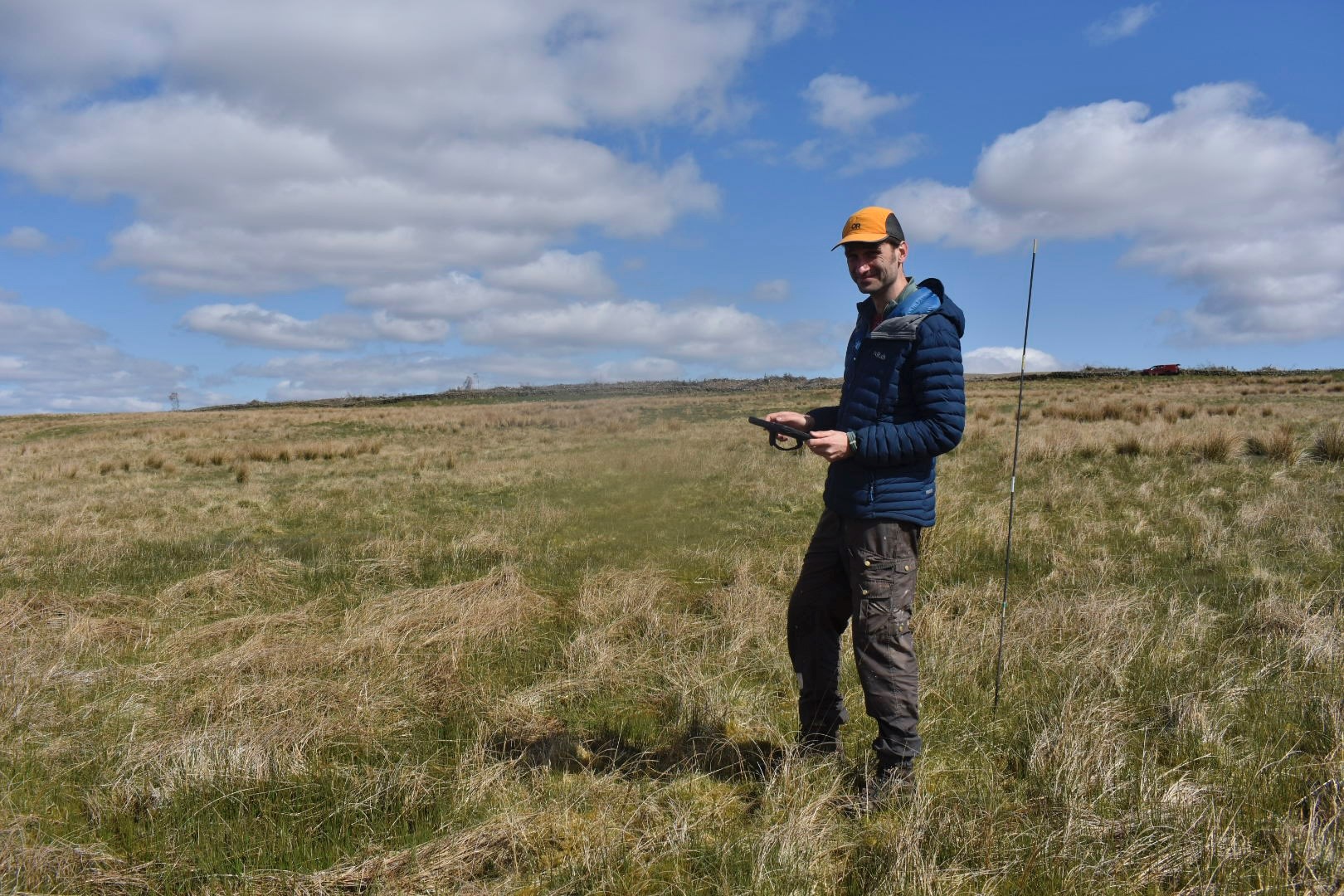
Stuart Burbidge is emerging as one of Scotland's leading peatland restoration specialists. A combination of practical, hands-on experience combined with a deep understanding of the hydrology and ecology of Scotland's peatland habitats sets Stuart apart as a leader in this rapidly growing rural industry. Stuart's commitment to empirical knowledge and his confidence to challenge unproven claims is exactly what the peatland sector needs at this time. The climate crisis demands urgent action, but these efforts must be properly focused if peatland restoration is to be truly effective and stand the test of time.
Stuart's initiative and drive are clear to anyone who has met him professionally. Formerly a gas engineer, he retrained 7 years ago to gain a degree in Forestry and Conservation. He now scopes, designs and delivers peatland restoration projects to the highest standards, using the skills he has honed working in the sector to ensure his projects' outcomes are impactful and lasting. With a portfolio of projects now covering more than 45,000 hectares from the Scottish Borders to Sutherland, Stuart's impact can be seen in the vast areas of peatland now on the road to recovery. Stuart's commitment to the rural sector extends beyond his personal work. He has built a team of skilled professionals within Bidwells and provided expert technical advice to a wide range of peatland stakeholders including the Scottish Government, NatureScot, the Cairngorms National Park Authority and the IUCN Peatland Code. Stuart recognises that an effective peatland restoration sector requires a wide variety of actors to pull together, with a shared understanding of the mission to be achieved and the challenges to be overcome, and he works tirelessly with colleagues to help build this consensus.
Stuart has made a difference to rural Scotland in two ways. Firstly, through the specific peatland restoration projects he has worked on, which are restoring large areas of wetland habitat, providing improved habitat for wildlife and enhanced ecosystem services for people. In addition, Stuart has worked collaboratively to drive forward thinking across the peatland sector on restoration itself. How does the sector define restoration? Which degraded peatlands can actually be restored? How can hydrological measures be used to verify restoration outcomes? These questions may seem very specific, but they are essential if Scotland's resources and efforts are to be used efficiently and effectively to maximise the positive outcomes of peatland restoration. Evidence of Stuart's efforts to drive these conversations forward can be seen in his extensive involvement with Peatland ACTION and the Peatland Code, his work on social media to engage the peatland restoration community on issues of cost, practical implementation and future-proofing projects, and his efforts to educate clients, investors and the wider land management community about what is possible, realistic and desirable for peatland restoration.
As well as using social media to increase engagement within the peatland restoration sector, Stuart has also driven forward collaborations with academic partners. On projects in the Cairngorms National Park, Stuart is working with leading peatland scientists from the University of Dundee to trial restoration techniques to tackle severely eroded blanket bog habitats. Many land managers in Scotland are attempting to restore severely eroded peatlands, partly because of the high levels of greenhouse gases emitted by these degraded habitats. However, there is little evidence on which restoration techniques can actually achieve robust and long-term positive outcomes. It is vital that the sector fills this knowledge gap to avoid wasting time and effort on unrestorable areas of peatland and techniques that will ultimately fail to permanently restore eroded peatlands. As a result, Stuart's initiative to integrate research into active peatland restoration projects will provide vital data for the sector as a whole, which can be used over time to build the necessary evidence base to help Scotland permanently restore as much of its degraded peatland as possible.