

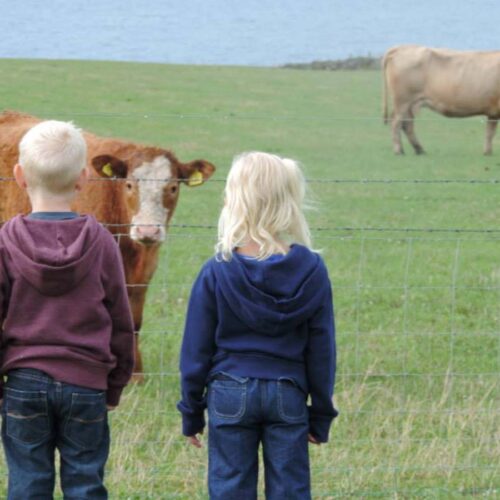
Down on the Farm offers a quirky collection of places to stay on a working farm in Aberdeenshire. From threshing mill huts to hideaways by the sea, Down on the farm has the facilities to cater for tourists, visitors and locals wishing to explore Aberdeenshire, while getting close to nature and experiencing farm life. Down on the Farm is run as a diversification to the core farming business, sharing the 200 acres of grassland that is home to 200 cows and 130 sheep. Following the success of the glamping initiative which began in 2012, ‘Farm Experiences’ were introduced in 2019 and have continued ever since. Now into their sixth year, Down on the Farm continues to host families, couples and groups on their farm to educate and raise awareness of farming and food production in Scotland.
Following multiple requests from glamping guests to stroke, feed and photograph the farm animals, ‘Farm Experiences’ was launched to educate visitors. Taking a leap of faith, the old farm chaumer was renovated into a venue for guests, complete with washing and toilet facilities. Visitors have access to three core experiences, 1. Sheep Shearing Tours; 2. Lambing Tours (Summer and Winter); 3. Cow and Coast Tours. The hosts felt that whilst offering the opportunity to cuddle a lamb may have been the easiest route to take, it was more important to go into deeper detail and educate their guests. Across the three tours, visitors are taught animal husbandry, traditional and modern farming practices, and how sustainable food production works. Visitors are welcome to explore the acreage via trailer tours to the magnificent coastline, while Carole and Matthew inspire them with their vast knowledge of local history and folklore. As custodians of the countryside and advocates for rural ways, the couple work in harmony with nature, wildlife, and weather to share the story of hundreds of years of Scottish agriculture.
Down on the Farm is unique because the owners acknowledge that guests are just as likely to visit from the surrounding area as are likely to be international visitors. Through a strong online presence and the willingness to adapt for visitors out of season, Down on the Farm has been able to make the most of new trends in agritourism. By educating guests on food production within a beautiful setting, the business strikes a balance between providing memorable outdoor experiences with assurances that the farm will continue to operate well into the future.
Down on the Farm works with the environment in mind as shown by their efforts to maximise the use of existing space. Projects have included the conversions of farm buildings and huts into accommodation pods by local tradespeople using locally available materials. The business works hard to accommodate school children and uniformed organisations alongside tourism, further spreading countryside awareness.
By sharing farming knowledge with their own children, Carole and Matthew began to understand the knowledge gap that existed for families living in towns and cities. The reward from teaching visitors is the knowledge that they leave with a better understanding of farm life in north-eastern Scotland. The couple’s natural warmth and effortless engagement feels as though they are welcoming friends to their property, which, combined with the interactive nature of the tours, enables knowledge to be shared and absorbed by all ages.
A persistent challenge has been a lack of tourism to Fraserburgh, and the couple recognise that improvements will only be possible by changing people’s perceptions of the area. It is more important than ever that Down on the Farm becomes a tourist destination itself by catering to day trippers and overnight guests and the couple’s willingness to share the area’s natural beauty will undoubtedly help this. Since Down on the Farm operates alongside a working farm, visitors get an honest experience of farm life, with particular attention given to showing the public how quality Scotch beef and Scotch lamb is produced. The couple believe that leaving out certain parts of their routines would be wrong and would give people a false sense of what happens in the countryside. Navigating this challenge to create an inclusive experience has been refreshing and sets the business apart from more traditional ‘visitor attractions’.