

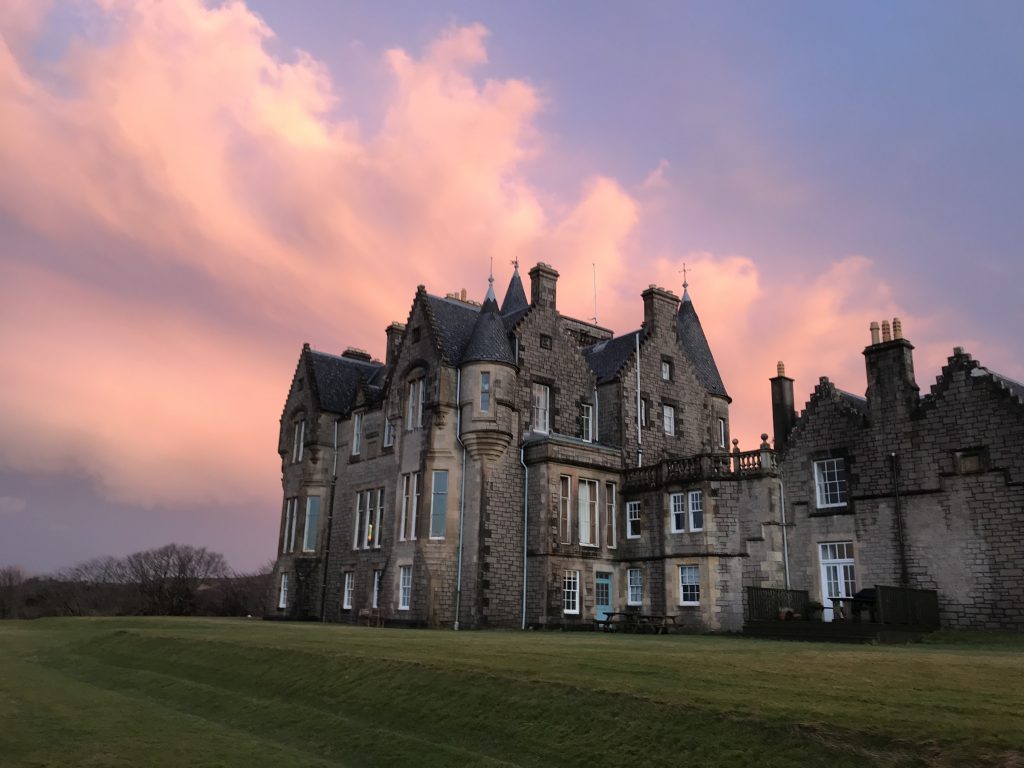
Glengorm Farming Partnership led by Tom Nelson, with support from the Mull and Iona Community Trust (MICT), has seen the delivery of much needed new affordable homes on the Isle of Mull. Recognising the acute need for affordable housing on Mull, Glengorm is committed to increasing the supply of permanent homes locally, including re-leasing land for new builds and converting some of their properties from short-term to long-term lets.
The inspiration for the Home Farm Development was to repurpose a classic old farm steading which had a byre, dog kennels and old dairy but was completely under used for modern agriculture. Tom Nelson was aware that there was a housing issue on Mull, and he was also suffering recruitment problems due to the shortage of housing.
There was a clear lack of rental accommodation so he decided that if the building was to be repurposed it would be for long-term letting. Renovating the agricultural steading at Home Farm has added a further five new homes, which are now let for affordable rent.
The project has been made possible thanks to grant funding from the Scottish Government’s Rural and Islands Housing Fund, and Argyll & Bute Council’s Strategic Housing Fund. Mull and Iona Community Trust supported Glengorm in securing the grant funding, carrying out community consultation work to evidence the housing need, and advising on the required allocation policy. While the Rural & Islands Housing Fund is open to landowners across all sectors, Glengorm was the first private landowner in Argyll to have been awarded the grant.
This new housing is intended to help reinforce and grow the existing community. The architects carried out a feasibility study for the site, alongside the MICT, consulting with residents and reviewing what type of housing was most needed. They also conducted bat and bird surveys which led to the relocation of an existing bat colony.
The design brief was for the units to be spacious rather than cram in as many homes as possible. The existing farmhouse and flats were upgraded as part of the project. To retain the traditional character of the steading, the design retained the 2ft thick stone walls, but brought up to a high energy efficiency standard, with new windows sympathetically added and the roof renewed. The homes are served by the farm’s private water supply and a new Klargester Biotec sewage treatment plant was installed.
The key to developing the new buildings was that they were affordable to heat and rent, to satisfy (at least in part) the known need on the island. The project employed a local contractor and tradespeople who were not only local but had family connections to the buildings. Construction began just before the supply chain impacts from Covid and the Ukraine War were felt. The viability challenges of the £1.1 million build cost have been overcome by focusing on outcomes and the consensus is that it has been worthwhile because they are now providing five extra homes.
When the feasibility study was carried out the housing survey generated 77 expressions of interest, and in the end, there were 49 applications for the five properties. Tom is pleased that by repurposing redundant farm buildings he has added to the rental housing stock in the community without greatly impacting the beauty of the island. The addition of these five homes increases their long-term rental properties to 13 on Glengorm, and with around 50 residents, they now accommodate the highest number of islanders in over 120 years. The project was finally completed in autumn 2023, which is a notable achievement given the challenges he faced and has made a small but very significant dent in the housing shortage on the Isle of Mull.