

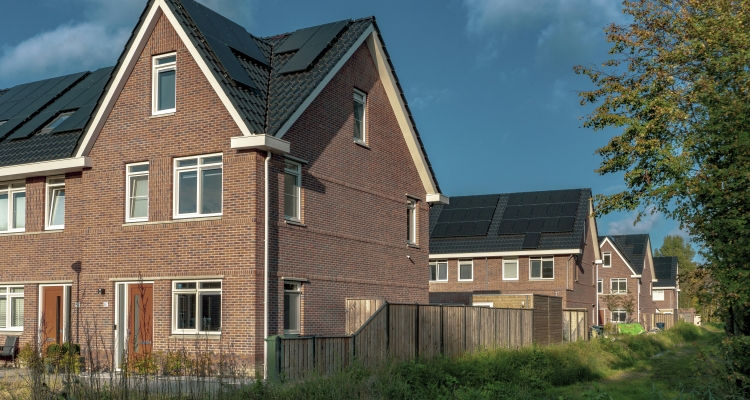
£100million of rural funding spent on city housing, as SLE calls for urgent review
Press ReleaseThe rural business organisation Scottish Land & Estates (SLE) is calling on the Scottish Housing Minister to return over £100million to Scotland’s rural communities after a recent Freedom of Information Request revealed that funding earmarked for rural housing developments was used to build homes in the cities of Aberdeen and Edinburgh.
Since 2018, £104.8million of money ringfenced by the Scottish Government to build affordable housing in rural Scotland has been granted to Edinburgh and Aberdeen city councils to build new homes, despite the urban local authorities already having access to funding for city developments.
SLE’s Housing Policy Adviser, Anna Gardiner, added that this situation coming to light should lead to an urgent review of the Scottish Government’s criteria for selecting new housing sites, with the 6-fold classification guidance proving ineffective at discerning between urban and rural areas.
SLE Housing Policy Adviser, Anna Gardiner, said:
“Scotland’s rural communities are being short-changed by the flawed criteria for urban-rural classifications. Not only do they receive a lower proportion of funding in the first place, but the funding they are receiving is now being spent by city local authorities. This is a wholly unacceptable revelation that must be addressed urgently.
“At SLE, we have often made the case that rural Scotland is treated unfairly, with little understanding of the challenges facing our communities. Regardless of our contention that rural issues are poorly understood by some aspects of government, surely even they would agree that classifying Gilmerton in Edinburgh, or Dyce in Aberdeen as ‘rural’ is a step too far.
“The Scottish Government must take steps to return this funding to the rural communities it belongs to, and robustly interrogate the mechanisms that allowed this rural funding to be funnelled into the cities.
“We know that housing shortages are a key driver or rural depopulation, and any measures to help deliver new affordable homes in areas hit by this issue can make a huge difference. It is concerning that those communities struggling to remain sustainable because of a lack of homes, also have difficulty accessing funding ringfenced for rural housing, whilst it is apparent that those very funds are being capitalised on in what are undoubtedly large urban areas.”