

Guest blog: ‘The Cinderella of Renewables’: Why Low Carbon Heat is a Huge Economic Opportunity for Landowners
The low-carbon heat sector in the UK remains vastly underdeveloped compared to renewable electricity. For example, at the community energy level, while wind, solar, and hydro have a combined installed capacity of 397MW, low-carbon heat accounts for only 4.8MW. This massive gap highlights the untapped potential for landowners to drive growth in the sector, generate income, and contribute to Scotland’s net-zero ambitions – something we’re highlighting in our forthcoming Community Heat Development Project (CHDP) final report for Scottish Government.
One of the biggest challenges in adopting low-carbon heat solutions, such as air source heat pumps (ASHPs) and heat networks, is the high upfront cost. Landowners interested in heat networks or large-scale heat pump projects often struggle with access to capital. However, the Scottish Heat Network Fund (SHNF) is designed to bridge this financial gap by offering grants and financial support to landowners, communities, and local authorities. The SHNF requires drawdown of capital funding by March 2026 and we are advocating to have another funding round with more funding available, making it easier to develop projects that benefit both landowners and surrounding communities.
Strategic and innovative partnerships can attract investment and reduce financial risk for community groups who don’t have the required skillset, experience or knowledge on how to attract investment of the scale required. Where lower energy costs are likely, such as through the use of waste heat solutions, long-term savings and carbon reduction benefits can improve financial viability.
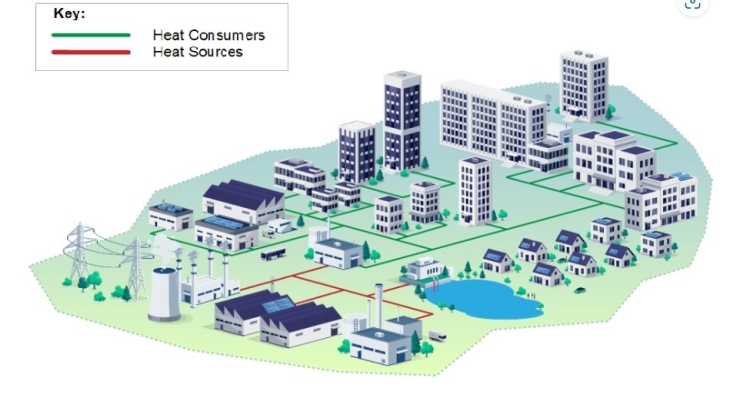
Developing a heat network or a communal ASHP system requires technical expertise, funding, and collaboration between different stakeholders. Landowners can partner with community groups, local councils, housing associations, and private investors to pool resources, share skills, and create sustainable projects. Strategic collaborations can also reduce financial risk and ensure projects are designed for long-term economic viability.
Our report also sets out that misinformation about the costs and benefits of low-carbon heating is also a major barrier to adoption. Many landowners and communities hesitate due to concerns about high installation costs and uncertain long-term savings. To counteract this, there is a strong need for independent and reliable information from expert consultancies to provide impartial guidance on costs, performance, and funding opportunities, ensuring that landowners make informed investment decisions.
Recommendations to Scottish Government which Reheat are highlighting include the need for the establishment of an accessible central source of information, guidance and standards as a freely available and widely-promoted web resource, and making relevant data available to communities and their advisors to assist with developing the technical and economic case for heating projects.
By leveraging available funding, forming strong partnerships, and accessing accurate information, landowners can play a key role in scaling up low-carbon heat in Scotland, unlocking both financial returns and environmental benefits.

The views expressed in this blog are those of Reheat and do not necessarily reflect the views of Scottish Land & Estates. No liability can be accepted by Scottish Land & Estates or any of its staff for any misstatement in it or omission from it.
Comments