
Nominee Summary
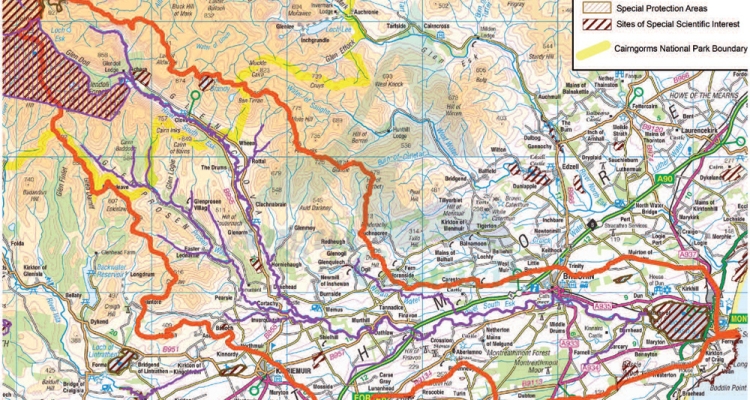
The River South Esk catchment in Angus is home to some of the most important wildlife in Scotland and is designated as a Special Area of Conservation for Atlantic Salmon and Freshwater Pearl Mussel. The River South Esk Catchment Partnership (RSECP) was established in 2005 with the aim of identifying the main issues in the catchment and creating a Catchment Management Plan. Published in 2009, the RSECP catchment management plan included 65 environmental, social and economic actions, of which 90% had been delivered by 2017. All helping to ensure the catchment is managed in a climate resilient and sustainable way.
Reduction of carbon footprint
The River South Esk Catchment Partnership aims to reduce its carbon footprint as an organisation, through its operations, project delivery and wider influence in Angus and the Tayside region. This is achieved in ways such using innovative online consultation practices alongside traditional methods, cutting paper use and staff mileage. The Partnership is also a member of and delivers against Climate Ready Tayside and the Angus Sustainable Energy & Climate Action Plan, initiatives with remits to reduce Angus area wide emission’s and embed climate change adaptation and resilience. Importantly, project delivery incorporates the use of locally sourced materials, the non-removal and reuse of materials on site and the purchasing of local provenance and plastic free products where possible. Supporting Angus Council and Cairngorms National Park Authority in their response to the climate and nature crises through land use change, the partnership was awarded Scottish Government funding from NatureScot in 2022 from the Nature Restoration Fund. The project ‘Restoring the River South Esk: A Nature Rich & Climate Resilient Catchment’ aims is to increase the biodiversity, climate resilience and ecological coherence of the River South Esk Catchment. It will deliver long lasting, transformational change in response to the climate and nature crises. The projects focus on restoring aquatic and terrestrial habitats will support carbon sequestration at scale, and detailed ecological and geomorphic baselines of the project’s sites will provide an important understanding of how healthy connected ecosystems function as part of climate resilient nature networks.
Overcoming challenges
The River South Esk Catchment Partnership (RSECP) is a voluntary Partnership. It was established so that catchment users, with a range of priorities, could come together to manage risk and overcome challenges and agree the best way forward in achieving results for all. The River is a water resource of immense value to a variety of users including communities and businesses. It is a source of drinking water, irrigation for crops, watering for livestock, a valuable habitat for wildlife, and acts as a basis for tourism, recreation and angling. For 20 years RSECP partners have worked with agencies, landowners and communities to deliver and monitor the impact of sustainable land based and economic activity. Developing relationships with Angus rural businesses and communities has been extremely valuable and has laid a foundation for ongoing partnership working. To overcome challenges associated with integrated catchment management, consultation with land managers and communities had been key. Any proposed change to the management of land requires the agreement of all parties and timescales can often be a challenge. Future partnership working can be shaped by lessons learned in recent years, as ambition to deliver for the climate and nature crises grows. The Partnerships plans and projects include extensive consultation. Delivering landscape scale projects impact on nature and people and their livelihoods. Engagement as part of the Partnership’s £1.5 mil Nature Restoration Fund Project – ‘Restoring the River South Esk: Nature Rich & Climate Resilient Catchment’ involved engagement with sitting agricultural, sporting, and residential ten