

Guest blog: Cutting Carbon, Cutting Costs: The EPC Advantage of Heat Networks
Rural estates across Scotland face pressure to improve the energy efficiency of their buildings as part of the drive towards net-zero, subject to the PSR provisions set out in the forthcoming Heat in Buildings Bill. With Scottish Government’s target to phase out fossil fuel heating by 2045, for many estates (where buildings are older, off-grid, and typically heated by oil or LPG), this will be a challenge. One solution gaining momentum is adopting low-carbon heat networks, which can deliver improvements in EPC ratings while supporting landowners’ goals.
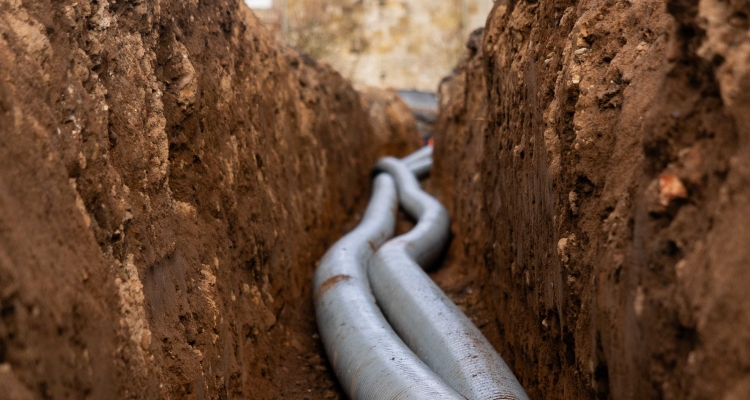
A low-carbon heat network supplies heat from a central, efficient source to multiple buildings via insulated pipes. This might be a biomass boiler using locally sourced woodchip, or a large-scale heat pump system connected to a shared ground-loop. Instead of each user relying on individual boilers, the network provides a steady, highly efficient heat source to connected properties. This approach helps improve EPC ratings in two key ways:
Firstly, bulk heat production and the use of renewable fuels can lower heating costs, as noted in Ofgem’s Heat Networks: Consumer Protection consultation and BEIS’s (now DESNZ) Heat Networks: Building a Market Framework consultation. Both report that well-designed networks reduce costs compared to individual boilers by using shared infrastructure and economies of scale. Since EPC ratings are partly based on a property’s fuel costs, this has a positive impact.
Secondly, heat networks can dramatically cut emissions. Ofgem and BEIS highlight that heat networks enable access to low-carbon heat sources such as biomass, heat pumps, and waste heat, supporting decarbonisation of heat at scale and improving a building’s environmental impact rating.
Recent projects highlight the advantages of low-carbon heat networks. At National Trust site, Lyme Park, our heat network optimisation project achieved a distribution efficiency of 87%, with boiler systems seeing 20% performance increase, resulting in a 40% reduction in fuel consumption. Another district heat project at Hoar Cross Hall Hotel - a 1MW sustainable biomass system that replaced oil boilers – saves the owners approximately 1,000 tonnes of CO₂ annually and has reduced fuel expenses by over 30%. Elsewhere, in Enfield, a Ground Source Heat Pump (GSHP) system serving four hundred flats boosted EPC scores by eight Standard Assessment Procedure (SAP) points, projected to elevate the EPC rating by a band, as per Kensa Group’s testimony to UK Parliament.
Such examples demonstrate that low-carbon heat networks are technically viable and a powerful means for reducing emissions and fuel expenses, enhancing energy performance, and supporting estate and landowners’ compliance with future EPC standards. Although installation costs can be high, funding via schemes such as the Scottish Heat Network Fund is helping to develop projects. As a result, by investing in low-carbon heat networks, estates can protect the long-term value of their properties, improve tenant comfort, and play a significant role in Scotland’s climate goals.
Link to fund: https://www.gov.scot/publications/heat-network-fund-application-guidance/
The views expressed in this blog are those of Reheat and do not necessarily reflect the views of Scottish Land & Estates. No liability can be accepted by Scottish Land & Estates or any of its staff for any misstatement in it or omission from it.
Comments