Submission Details ------------------
Nominee Summary
Crown Estate Scotland’s Solar North Phase 1 programme demonstrates sector-leading action on rural decarbonisation. Through the installation of solar PV, battery storage, hot water diverters and electric vehicle charging infrastructure across its rural housing portfolio, the initiative delivers immediate and measurable reductions in carbon emissions while improving energy efficiency and resilience. Crucially, the programme has been designed as a scalable and replicable model, balancing environmental ambition with practical delivery across tenanted properties. By integrating renewable energy generation with smart energy use, Crown Estate Scotland is setting a benchmark for how rural estates can lead the transition to net-zero.
Reduction of carbon footprint
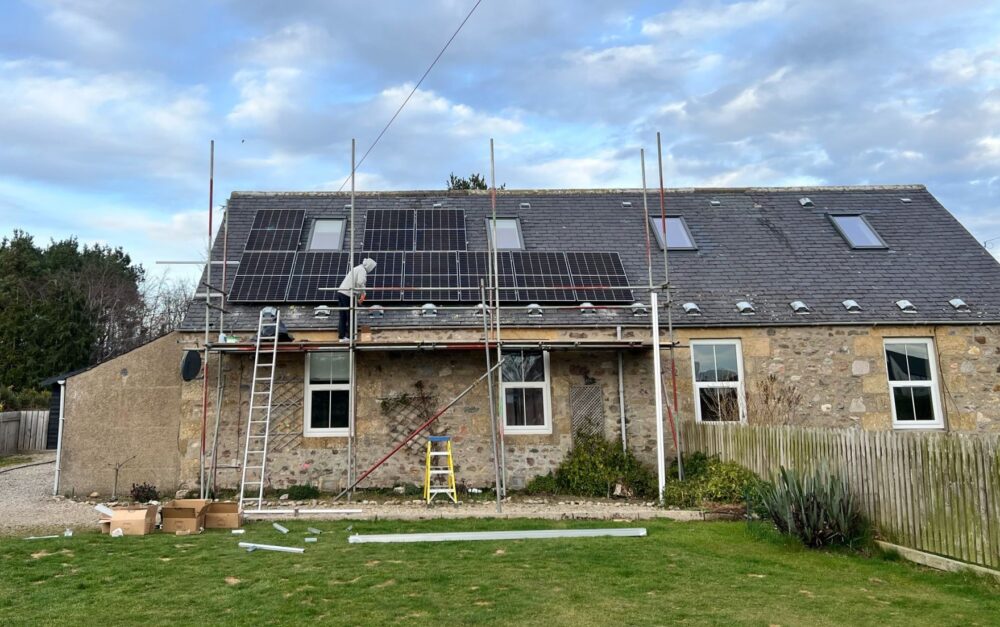
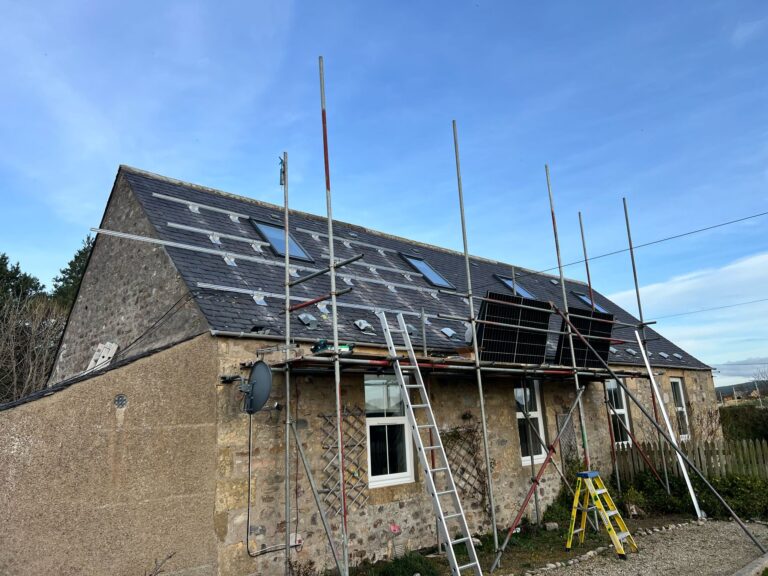
The Solar North Phase 1 programme delivers direct, measurable carbon reductions by transforming how energy is generated, stored, and used across rural homes. By installing solar photovoltaic systems, each property is able to generate clean electricity on-site, immediately reducing dependence on carbon-intensive grid supply. This impact is significantly enhanced through the integration of battery storage, allowing renewable energy to be retained and used when demand is highest. Rather than exporting excess generation or relying on fossil-fuelled energy at peak times, properties can operate with greater self-sufficiency—maximising the carbon benefit of every unit of renewable electricity produced. Additional technologies further optimise efficiency. Hot water diverters ensure that surplus energy is captured and used productively, reducing reliance on conventional heating systems. Meanwhile, the installation of EV charging infrastructure extends the programme’s carbon impact beyond buildings, supporting tenants to transition toward low-emission transport. Importantly, the programme delivers not just incremental improvement but systemic change. By combining generation, storage, and smart utilisation, it moves rural homes toward an integrated low-carbon energy model. This is particularly significant in rural contexts, where energy costs and emissions per household are often higher due to reliance on oil or electric heating. Taken together, these interventions represent a meaningful reduction in operational emissions across the estate and demonstrate how rural landowners can contribute directly to national net-zero targets through practical, technology-led solutions.
Overcoming challenges
Decarbonising rural housing at scale presents a distinct and often underestimated challenge. Crown Estate Scotland’s rural portfolio spans geographically dispersed, traditionally constructed properties, many of which were not designed with modern energy systems in mind. Retrofitting these buildings demanded a careful balance between technical feasibility, tenant needs, and long-term sustainability goals. A key barrier was delivering meaningful carbon reduction without imposing disruption or complexity on tenants. The programme therefore prioritised solutions that are both intuitive and low-maintenance, ensuring that new technologies enhance rather than complicate daily life. Integrating solar PV, battery storage, and EV infrastructure into existing buildings required bespoke system design, addressing variations in building fabric, orientation, and grid connectivity. Cost and scalability were also central considerations. Rather than a one-off intervention, the approach was deliberately structured as a replicable model that could be rolled out across the wider estate. This required developing a delivery framework that balances upfront investment with long-term operational savings and carbon reduction. Crucially, the programme addressed the human dimension of climate transition. By working collaboratively with tenants—providing guidance, reassurance, and practical support—Crown Estate Scotland ensured that behavioural adoption matched technological change. This alignment has been essential in unlocking the full carbon-saving potential of the installed systems. In overcoming these combined technical, financial, and behavioural challenges, the project has established a credible and scalable blueprint for decarbonising rural property portfolios.