

Nominee Summary
Since winning the Iver Salvesen Award in 2024, IndiNature has demonstrated accelerated climate impact through industrial scale-up. The company secured a £2 million investment, commissioned a second production line in 2025, and expanded manufacture of carbon-storing hemp insulation in Scotland. It was named Manufacturer of the Year at the 2025 UK Green Business Awards, reflecting strong innovation and market adoption. IndiNature is rebuilding UK industrial hemp supply chains, supporting farmers and rural diversification while reducing embodied carbon in construction. It now delivers scalable, verified climate solutions that combine measurable carbon reduction, economic value creation, and long-term system change in the built environment.
Reduction of carbon footprint
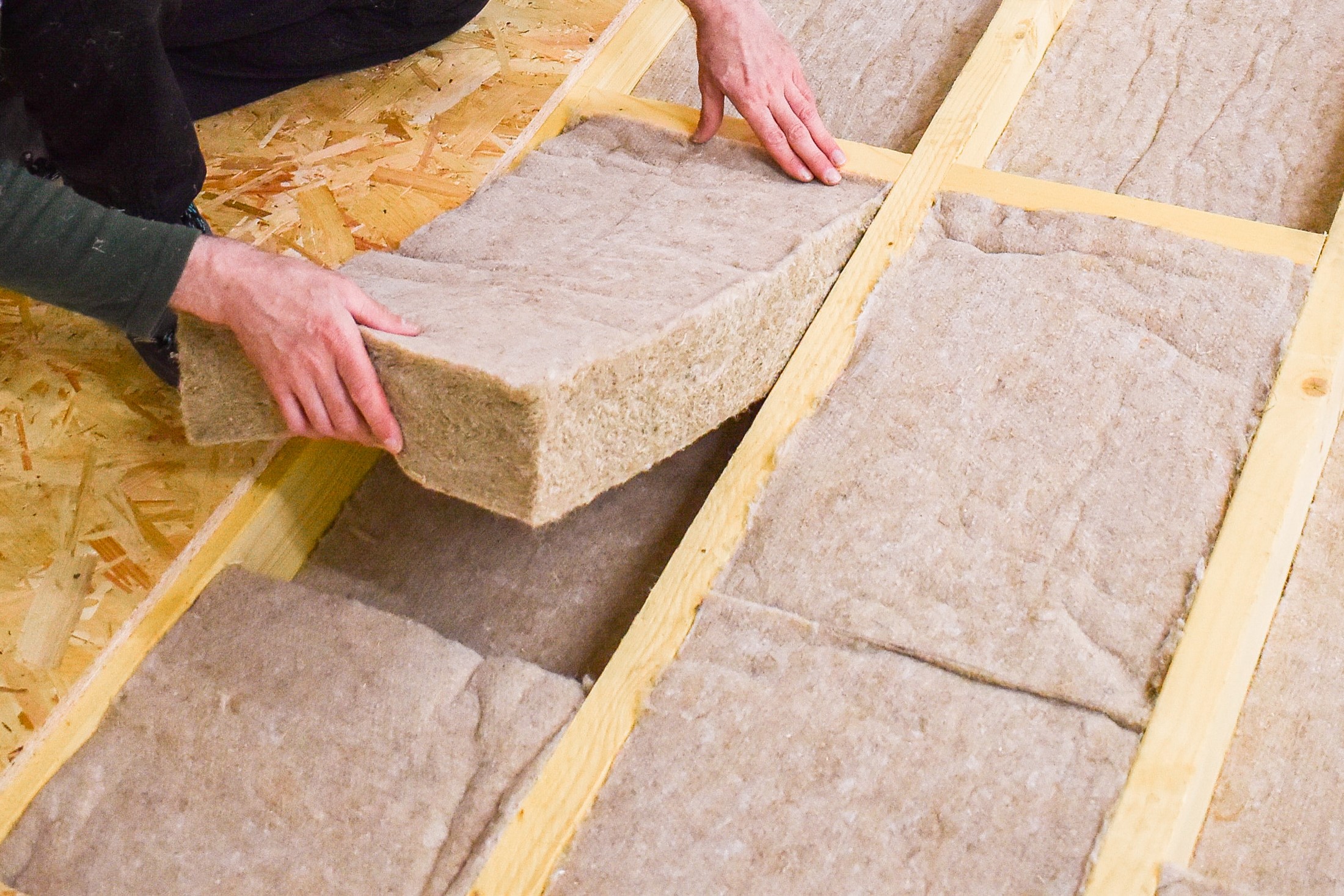
IndiNature’s core climate impact lies in replacing high-carbon insulation materials with carbon-storing alternatives made from renewable agricultural fibres. Its hemp-based insulation products act as a carbon sink, locking atmospheric carbon into building fabric for the lifetime of the structure, while also avoiding the emissions associated with conventional petrochemical-based insulation. Since 2024, the company has significantly expanded production capacity through a second manufacturing line, increasing the volume of carbon-negative insulation available to the UK construction market. This scale-up directly translates into greater embodied carbon savings across residential retrofit and new-build projects adopting its materials. IndiNature has also strengthened the carbon efficiency of its own operations, optimising manufacturing processes in its Scottish Borders facility to minimise energy use and maximise material yield from UK-grown hemp. This reduces upstream emissions and reinforces the low-carbon integrity of its supply chain. A key contribution to carbon reduction has been the development of a UK-based hemp supply chain. By reintroducing industrial hemp as a rotational crop, the company enables carbon sequestration at the agricultural stage while displacing imported or fossil-fuel-derived materials. This creates a dual carbon benefit: sequestration in biomass and avoided emissions in construction. Collectively, these advances mean IndiNature is delivering carbon reduction across three levels: agricultural production, manufacturing, and built environment substitution. This systems-based approach ensures that every stage of the value chain contributes to measurable climate mitigation.
Overcoming challenges
IndiNature has faced the central challenge of scaling a novel, bio-based construction material within a conservative and highly regulated construction sector. Since winning the Iver Salvesen Award in 2024, the key challenge has shifted from proving technical viability to overcoming barriers to large-scale adoption, including certification pathways, supply chain development, and market familiarity with natural fibre insulation. A major constraint has been securing consistent volumes of UK-grown industrial hemp and aligning agricultural production with manufacturing demand. To address this, IndiNature has worked directly with farmers in the Scottish Borders and beyond to reintroduce hemp as a viable break crop, supporting trials and early-stage supply chain coordination. This has required investment in agronomic knowledge, processing infrastructure and long-term contracting models. On the manufacturing side, scaling production while maintaining low embodied carbon has required careful engineering of processes, energy use and material handling. The commissioning of a second production line in 2025 was a key milestone in overcoming capacity constraints while maintaining product integrity and carbon performance. IndiNature has also had to navigate stringent building standards and certification requirements to ensure its products are accepted in mainstream construction markets. Achieving third-party verification and strengthening performance data has been essential to building trust among architects, developers and specifiers. Despite these challenges, the company has successfully transitioned from a pioneering start-up to a scaling manufacturer, demonstrating that low-carbon materials can compete in performance, compliance and cost within the UK construction sector.