

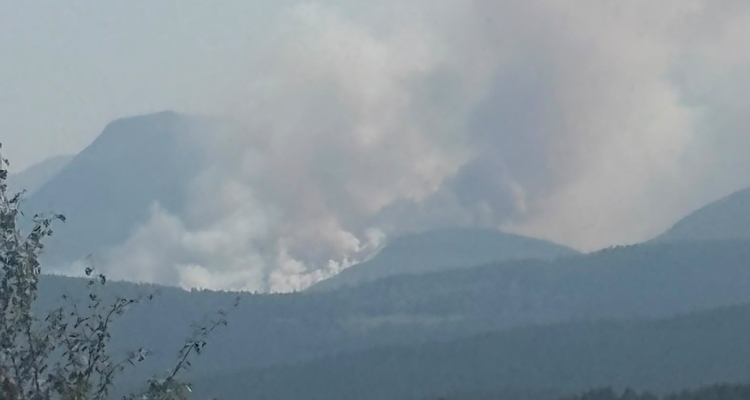
Cairngorms wildfire fund welcomed as call grows for action on future fire risk
Press ReleaseRural businesses have welcomed the announcement of a new £3 million fund to support those affected by the Cairngorms wildfire.
Announced by the Scottish Government, the fund will be administered by The Highland Council and will help businesses manage the immediate financial impact of the wildfire, maintain continuity and support their longer-term recovery.
The council is expected to publish full details of the fund and the application process in the coming days.
Ross Ewing, Director of Moorland and Strategic Projects at Scottish Land & Estates, said: “This funding is welcome and will provide vital support to businesses affected by the Glenmore-Strathnethy wildfire in the Cairngorms National Park.
“Many have suffered significant financial losses and remain unable to operate at full capacity. Others have also committed considerable resources of their own to supporting efforts to bring the fire under control, and work is ongoing to quantify the scale of the private and third sector response.
“Rural businesses are resilient, but the impact of a wildfire on this scale cannot be overcome without assistance. This funding will be crucial as recovery begins, and the Scottish Government deserves credit for responding swiftly.”
The incident has also renewed calls for a more strategic approach to wildfire risk. While the £3 million recovery fund is welcome and necessary, its scale also underlines the cost of responding after major fires have taken hold, and the need to invest earlier to reduce the likelihood, intensity and severity of future incidents.
Mr Ewing added that this must include practical preventative action on the ground, including a workable muirburn new licensing scheme that enables land managers to control fuel loads. He also called for action to strengthen the capacity needed to respond effectively when wildfires do occur.
Mr Ewing continued: “Scotland faces a growing wildfire threat that is becoming more severe with each passing year. Recent incidents have demonstrated both the economic cost and the scale of the environmental and operational challenge, as well as the pressure placed on firefighters, gamekeepers, land managers, rural businesses and local communities.
“Recovery funding is vital, but it cannot be the whole answer. The Scottish Fire and Rescue Service wildfire strategy is supported by planned investment of around £1.6 million over three years, covering specialist equipment, PPE, vehicles and training. Set against a single £3 million recovery fund for one major wildfire, that figure makes a powerful case for sustained investment in prevention before risk becomes crisis.
“Scotland needs to reduce fuel loads, improve preparedness, support training, invest in equipment and ensure those who manage land have the tools and confidence to act. Investment must be directed at practical prevention that reduces the risk of severe fires taking hold, and at properly resourced response so that when wildfires do happen they can be tackled quickly, safely and effectively.
“A workable and proportionate muirburn licensing system is part of that picture. Controlled burning is one of the practical tools available to manage vegetation and reduce fuel loads, and the scheme must be straightforward enough to allow responsible land managers to use it safely and effectively. We are monitoring the implementation of the scheme closely.
“Muirburn - the controlled burning of vegetation - is recognised nationally and internationally as an important tool for managing fuel loads and reducing wildfire risk. It should sit alongside enhanced training, preparedness and close partnership working between public bodies, rural businesses and the Scottish Fire and Rescue Service.
“Prevention must also be matched by stronger response capability. As we have argued previously, the UK and Scottish Governments should be investing in dedicated aerial resources so that major wildfires can be tackled rapidly, particularly in remote and upland areas where access is difficult and fires can spread quickly.”