

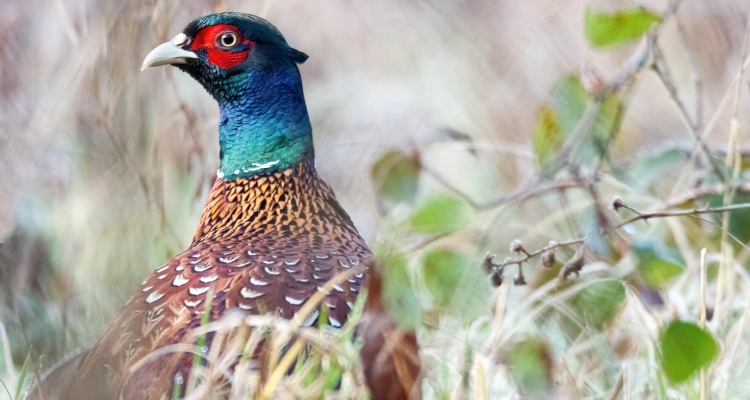
Defra must consider Scottish impact of changes to gamebird regulation in England
Press ReleaseChanges to gamebird regulation in England could have significant consequences for Scottish rural businesses, jobs and conservation, Scottish Land & Estates (SLE) has warned.
Responding to Defra’s Call for Evidence on Gamebird Release, Shooting and Welfare during Rearing in England, the rural business organisation said the sector’s substantial cross-border supply chains mean the effects of future policy decisions could extend well beyond England.
SLE is seeking assurances that consequences for Scotland will be included in Defra’s assessment of future regulation, alongside the wider environmental, economic and community benefits supported by sporting activity.
Nic MacLeod, Policy and Public Affairs Adviser at Scottish Land & Estates, said: “Although this call for evidence concerns activities in England, the businesses and supply chains supporting the sector operate across the border. Decisions taken by Defra could therefore have material consequences for Scottish businesses and the people they employ.
“That is why we have argued for a clear commitment that these effects will be properly assessed before decisions are made. The geographical scope of the call for evidence should not limit consideration of its potential consequences.
“For Scotland’s rural communities, this reaches beyond individual shoots. Sporting activity supports local suppliers, contractors and hospitality businesses, as well as the jobs and skills needed to manage our countryside.”
SLE’s submission highlights how shooting supports businesses including accommodation providers, hotels, pubs, feed merchants, veterinary services and equipment suppliers. Much of this spending takes place during autumn and winter, when other tourism income is often lower, while associated land management sustains employment throughout the year.
To illustrate the wider contribution of sporting management in Scotland, the response cites evidence from seven Angus Glens estates managing more than 54,000 hectares. Moorland management supported 86 full-time jobs and 768 seasonal jobs, provided 68 rural homes and generated £6.6 million in annual economic activity, with more than 82% of expenditure retained locally.
The same estates also support habitat management, peatland restoration, wildlife monitoring and wildfire resilience. SLE argues that these activities must be considered when assessing what could be lost if future policy changes diminish the private investment associated with sporting activity.
The organisation also highlights the role of Wildlife Estates Scotland, an independently assessed accreditation scheme which promotes high standards of wildlife and habitat management, responsible sporting practice and continual improvement.
Nadia Flaherty, Policy Adviser for Wildlife Management, added: “Sporting income helps fund conservation work, retain specialist countryside skills and maintain the staff, equipment and infrastructure that contribute to wildfire preparedness and response.
“In communities where employment opportunities are limited, these jobs also help retain working-age families and sustain local services. Those wider benefits deserve a place in Defra’s assessment.
“High standards of animal welfare and environmental management are essential. Future policy should be informed by evidence about both the impacts of gamebird management and the consequences of reducing the investment that supports it.
“The habitat management, winter feeding and legal predator control supported by shooting also benefits Red List birds including curlew, lapwing, yellowhammer and tree sparrow. An eight-year study found that legal predator control produced an average threefold increase in breeding success among ground-nesting birds, underlining why Defra must consider the conservation benefits that could be lost if sporting investment is reduced.
“No alternative mechanism has been identified that could replace this combination of rural employment, conservation capacity and community support at a comparable scale without significant additional public or charitable funding. Defra must consider what could be lost in Scotland as well as what it hopes to achieve in England.”
A copy of SLE's consultation response is available to download here.