

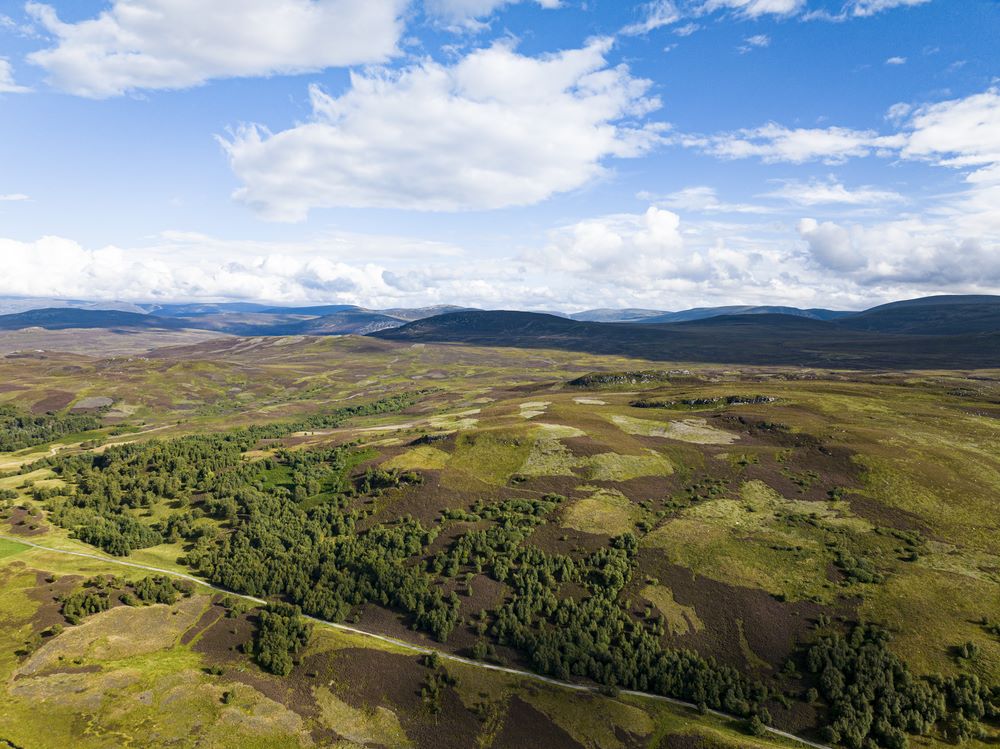
Our ancient woodlands are at a critical juncture. Faced with threats like overgrazing and environmental changes, many of these biodiverse and culturally significant ecosystems risk disappearing forever. However, with new financial incentives using the Woodland Carbon Code, remnant ancient woodlands now have a chance for restoration. Zulu Ecosystems develops woodland and peatland restoration projects that remove carbon, restore nature, and support communities through a unique tech-enabled approach, supporting landowners at every stage of the project lifecycle. In Scotland, Zulu Ecosystems’ recent collaboration with the National Library of Scotland has helped locate these ‘Lost Woods’ at scale.
Zulu Ecosystems set out to address the severe decline of Scotland’s ancient woodlands, which are crucial for biodiversity, carbon sequestration, and cultural heritage. Over the last few centuries, overgrazing, deforestation, and climate change have severely impacted these precious landscapes and once gone, they cannot truly be recreated. As part of Zulu Ecosystems ecological restoration work, the company developed the Lost Woods programme, a targeted approach to help land managers restore ancient woodland remnants by developing a way, for the first time, to secure caron credits. Thanks to work done over the last two years in conjunction with the Woodland Carbon Code (WCC), the UK’s voluntary carbon standard, there is now a new way to leverage investment finance to help restore and regenerate declining ancient woodlands. Previously, only woodland creation projects were eligible for the WCC. However, now through Zulu Ecosystem’s work, it has been agreed that remnant sites which have less than 20% woodland cover remaining, along with evidence of browsed regeneration, are eligible for carbon credits in the same way as woodland creation projects. In addition, the collaboration with the National Library of Scotland created a new digital resource of historic Scottish woodlands, aiding the development of the Lost Woods programme. This enabled the use of historic maps and machine learning to create the OS First Series Woodland Layer, pinpointing locations of ancient woodlands from 180 years ago. This innovative approach allows for targeted restoration efforts, enhancing biological and ecological continuity.
In 2024, Zulu Ecosystems completed the first Lost Woods scheme and are currently working on another site designated as an SSSI. In total, over 380ha of vital ancient woodland remnants have been restored and protected with many more to follow. The Zulu Ecosystems Lost Woods programme is now offering land managers new income streams through carbon credits, making conservation of some of these areas financially viable for the first time. These efforts have been commended with accolades such as the Wildlife Estates Scotland accreditation, highlighting the commitment of Zulu Ecosystems to sustainable land management and conservation excellence.
Through their collaboration with National Library of Scotland, the public has been invited to contribute to reviewing and refining the first OS First Series Woodland Layer by identifying missing woodlands and sharing their local knowledge on the historic woodlands. The ongoing initiative fosters a sense of ownership, involvement and interest in the conservation process as the public is actively helping improve the accuracy of the layer. Almost 2,000 users have viewed the NLS correction webpage, with over 680 submitted corrections. Regular releases of the layer and the interactive live correction total feature pop-up have helped maintain public interest and transparency, allowing users to check that their contributions have been integrated into the latest release. This collaborative effort has proven to be an invaluable resource in refining the OS First Series woodland layer, demonstrating the importance of public involvement in digital conservation projects.